ITLN1 Rabbit pAb (一抗) | Bioss
货号:bs-5129R
产品详情
相关标记
相关产品
相关文献
常见问题
概述
产品编号
bs-5129R
产品类型
农牧业/家禽抗体
英文名称
ITLN1 Rabbit pAb
中文名称
内皮细胞凝集素HL1抗体
英文别名
HL-1; HL1; INTL; ITLN; LFR; hIntL; omentin; ITLN1_HUMAN; ITLN1; ITLN-1; Endothelial lectin HL-1; Galactofuranose-binding lectin; Intestinal lactoferrin receptor; intelectin 1; intelectin 1 (galactofuranose binding)
抗体来源
Rabbit
免疫原
KLH conjugated synthetic peptide derived from human ITLN1: 131-230/313
亚型
IgG
性状
Liquid
纯化方法
affinity purified by Protein A
克隆类型
Polyclonal
理论分子量
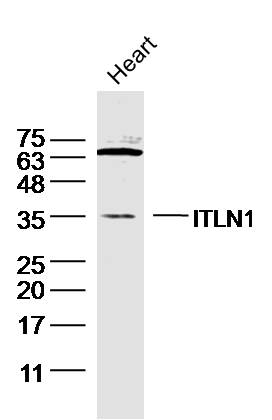
35 kDa
检测分子量
35 kDa
浓度
1mg/ml
储存液
0.01M TBS (pH7.4) with 1% BSA, 0.02% Proclin300 and 50% Glycerol.
研究领域
SWISS
Gene ID
保存条件
Shipped at 4℃. Store at -20℃ for one year. Avoid repeated freeze/thaw cycles.
注意事项
This product as supplied is intended for research use only, not for use in human, therapeutic or diagnostic applications.
数据库链接
背景资料
ITLN1 (Intelectin 1) is a Protein Coding gene. Diseases associated with ITLN1 include Obesity and Diabetes Mellitus, Noninsulin-Dependent. Among its related pathways are Common Cytokine Receptor Gamma-Chain Family Signaling Pathways and Innate Immune System. GO annotations related to this gene include carbohydrate binding. An important paralog of this gene is ITLN2.
产品应用
| 应用 | 已检合格种属 | 预测种属 | 推荐稀释比例 |
|---|---|---|---|
| WB | Mouse | Human, Rat, Pig, Cow, Horse | 1:500-2000 |
交叉反应
交叉反应: Human, Mouse (predicted: Rat, Pig, Cow, Horse)
相关产品
暂无相关产品
靶标
基因名
ITLN1
蛋白名
Intelectin-1
亚基
Homotrimer; disulfide-linked.
亚细胞定位
Cell membrane; Lipid-anchor, GPI-anchor. Secreted. Note=Enriched in lipid rafts.
组织特异性
Highly expressed in omental adipose tissue where it is found in stromal vascular cells but not in fat cells but is barely detectable in subcutaneous adipose tissue (at protein level). Highly expressed in the small intestine. Also found in the heart, testis, colon, salivary gland, skeletal muscle, pancreas and thyroid and, to a lesser degree, in the uterus, spleen, prostate, lymph node and thymus.
翻译后修饰
N-glycosylated.
相似性
Contains 1 fibrinogen C-terminal domain.
功能
Lectin that specifically recognizes microbial carbohydrate chains in a calcium-dependent manner (PubMed:11313366, PubMed:26148048). Binds to microbial glycans that contain a terminal acyclic 1,2-diol moiety, including beta-linked D-galactofuranose (beta-Galf), D-phosphoglycerol-modified glycans, D-glycero-D-talo-oct-2-ulosonic acid (KO) and 3-deoxy-D-manno-oct-2-ulosonic acid (KDO) (PubMed:26148048). Binds to glycans from Gram-positive and Gram-negative bacteria, including K.pneumoniae, S.pneumoniae, Y.pestis, P.mirabilis and P.vulgaris (PubMed:26148048). Does not bind human glycans (PubMed:26148048). Probably plays a role in the defense system against microorganisms (Probable). May function as adipokine that has no effect on basal glucose uptake but enhances insulin-stimulated glucose uptake in adipocytes (PubMed:16531507). Increases AKT phosphorylation in the absence and presence of insulin (PubMed:16531507). May interact with lactoferrin/LTF and increase its uptake, and may thereby play a role in iron absorption (PubMed:11747454, PubMed:23921499).
同靶标产品
相关文献
提示: 发表研究结果有使用 bs-5129R 时请让我们知道,以便我们可以引用参考文章。作为回馈,资料提供者将获得我们送上的小礼品。
具体参考文献:bs-5129R 被引用于2文献中