Complement C3 Recombinant Rabbit mAb (一抗) - WB,Flow-Cyt,ICC/IF | Bioss
Rrmab?兔单抗
货号:bsm-63199R
产品详情
相关标记
相关产品
相关文献
常见问题
概述
产品编号
bsm-63199R
产品类型
重组兔单抗
英文名称
Complement C3 Recombinant Rabbit mAb
中文名称
补体C3重组兔单抗
英文别名
AHUS5; ARMD9; ASP; C3a; C3b; CPAMD1; HEL-S-62p; CO3_HUMAN; C3; C3 and PZP-like alpha-2-macroglobulin domain-containing protein 1; complement C3; complement component 3; C3a anaphylatoxin; complement component C3a; complement component C3b; prepro-C3
抗体来源
Rabbit
免疫原
A synthesized peptide derived from human Complement C3: 1200-1250/1663
亚型
IgG
性状
Liquid
纯化方法
affinity purified by Protein A
克隆类型
Recombinant
克隆号
4E13
理论分子量
187 kDa
检测分子量
70110125 kDa
储存液
10mM phosphate buffered saline(pH 7.4) with 150mM sodium chloride, 0.05% BSA, 0.02% Proclin300 and 50% glycerol.
研究领域
SWISS
Gene ID
保存条件
Store at 4℃ for short term. Store at -20℃ for long term. Avoid repeated freeze/thaw cycles.
注意事项
This product as supplied is intended for research use only, not for use in human, therapeutic or diagnostic applications.
产品介绍
补体(complement,C)是由近20种不同血清蛋白组成的多分子系统,约占血清球蛋白总量的10%。补体在血清中的含量相对稳定,不因免疫应答而增加,仅在某些病理情况下才会发生波动。补体系统的基本组成包括9种血清蛋白成分,按发现的先后顺序而分别命名为C1-9。C3是一种β球蛋白,是补体中含量最多、作用最重要的一个组分,是补体两条主要激活途径的中心环节,有重要的生物活性作用,可在肝脏中产生。C3蛋白由α、β2条肽链经二硫键连接而成,本产品能特异性的识别C3的β链。
背景资料
C3 plays a central role in the activation of the complement system. Its processing by C3 convertase is the central reaction in both classical and alternative complement pathways. After activation C3b can bind covalently, via its reactive thioester, to cell surface carbohydrates or immune aggregates.
基因名
C3
蛋白名
Complement C3
亚基
C3 precursor is first processed by the removal of 4 Arg residues, forming two chains, beta and alpha, linked by a disulfide bond. C3 convertase activates C3 by cleaving the alpha chain, releasing C3a anaphylatoxin and generating C3b (beta chain + alpha' chain). C3dg interacts with CR2 (via the N-terminal Sushi domains 1 and 2). During pregnancy, C3dg exists as a complex (probably a 2:2:2 heterohexamer) with AGT and the proform of PRG2. Interacts with VSIG4. C3b interacts with herpes simplex virus 1 (HHV-1) and herpes simplex virus 2 (HHV-2) envelope glycoprotein C; this interaction inhibits the activation of the complement system. Interacts with S.aureus immunoglobulin-binding protein sbi, this prevents interaction between C3dg and CR2. Interacts with S.aureus fib.
亚细胞定位
Secreted.
组织特异性
Plasma. The acylation stimulating protein (ASP) is expressed in adiopocytes and released into the plasma during both the fasting and postprandial periods.
翻译后修饰
C3b is rapidly split in two positions by factor I and a cofactor to form iC3b (inactivated C3b) and C3f which is released. Then iC3b is slowly cleaved (possibly by factor I) to form C3c (beta chain + alpha' chain fragment 1 + alpha' chain fragment 2), C3dg and C3f. Other proteases produce other fragments such as C3d or C3g. C3a is further processed by carboxypeptidases to release the C-terminal arginine residue generating the acylation stimulating protein (ASP). Levels of ASP are increased in adipocytes in the postprandial period and by insulin and dietary chylomicrons.
Phosphorylation sites are present in the extracellular medium.
Phosphorylation sites are present in the extracellular medium.
疾病
Defects in C3 are the cause of complement component 3 deficiency (C3D) [MIM:613779]. A rare defect of the complement classical pathway. Patients develop recurrent, severe, pyogenic infections because of ineffective opsonization of pathogens. Some patients may also develop autoimmune disorders, such as arthralgia and vasculitic rashes, lupus-like syndrome and membranoproliferative glomerulonephritis.
Genetic variation in C3 is associated with susceptibility to age-related macular degeneration type 9 (ARMD9) [MIM:611378]. ARMD is a multifactorial eye disease and the most common cause of irreversible vision loss in the developed world. In most patients, the disease is manifest as ophthalmoscopically visible yellowish accumulations of protein and lipid that lie beneath the retinal pigment epithelium and within an elastin-containing structure known as Bruch membrane.
Genetic variation in C3 is associated with susceptibility to age-related macular degeneration type 9 (ARMD9) [MIM:611378]. ARMD is a multifactorial eye disease and the most common cause of irreversible vision loss in the developed world. In most patients, the disease is manifest as ophthalmoscopically visible yellowish accumulations of protein and lipid that lie beneath the retinal pigment epithelium and within an elastin-containing structure known as Bruch membrane.
相似性
Contains 1 anaphylatoxin-like domain.
Contains 1 NTR domain.
功能
C3 plays a central role in the activation of the complement system. Its processing by C3 convertase is the central reaction in both classical and alternative complement pathways. After activation C3b can bind covalently, via its reactive thioester, to cell surface carbohydrates or immune aggregates.
Derived from proteolytic degradation of complement C3, C3a anaphylatoxin is a mediator of local inflammatory process. It induces the contraction of smooth muscle, increases vascular permeability and causes histamine release from mast cells and basophilic leukocytes.
Acylation stimulating protein (ASP): adipogenic hormone that stimulates triglyceride (TG) synthesis and glucose transport in adipocytes, regulating fat storage and playing a role in postprandial TG clearance. Appears to stimulate TG synthesis via activation of the PLC, MAPK and AKT signaling pathways. Ligand for GPR77. Promotes the phosphorylation, ARRB2-mediated internalization and recycling of GPR77.
Derived from proteolytic degradation of complement C3, C3a anaphylatoxin is a mediator of local inflammatory process. It induces the contraction of smooth muscle, increases vascular permeability and causes histamine release from mast cells and basophilic leukocytes.
Acylation stimulating protein (ASP): adipogenic hormone that stimulates triglyceride (TG) synthesis and glucose transport in adipocytes, regulating fat storage and playing a role in postprandial TG clearance. Appears to stimulate TG synthesis via activation of the PLC, MAPK and AKT signaling pathways. Ligand for GPR77. Promotes the phosphorylation, ARRB2-mediated internalization and recycling of GPR77.
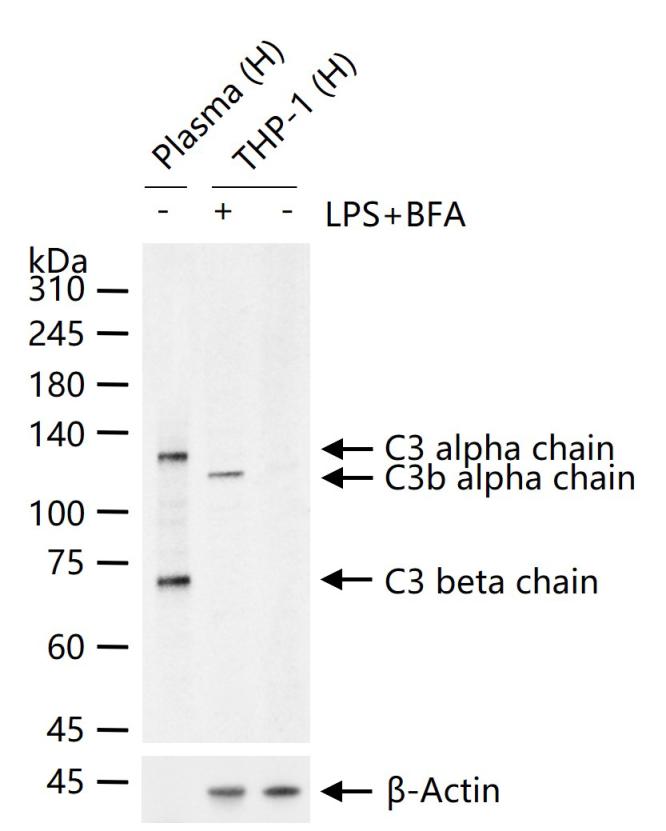
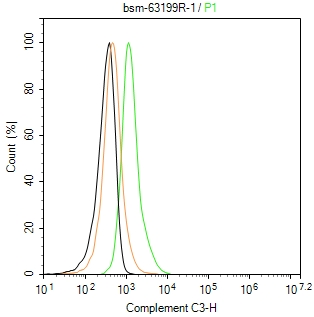
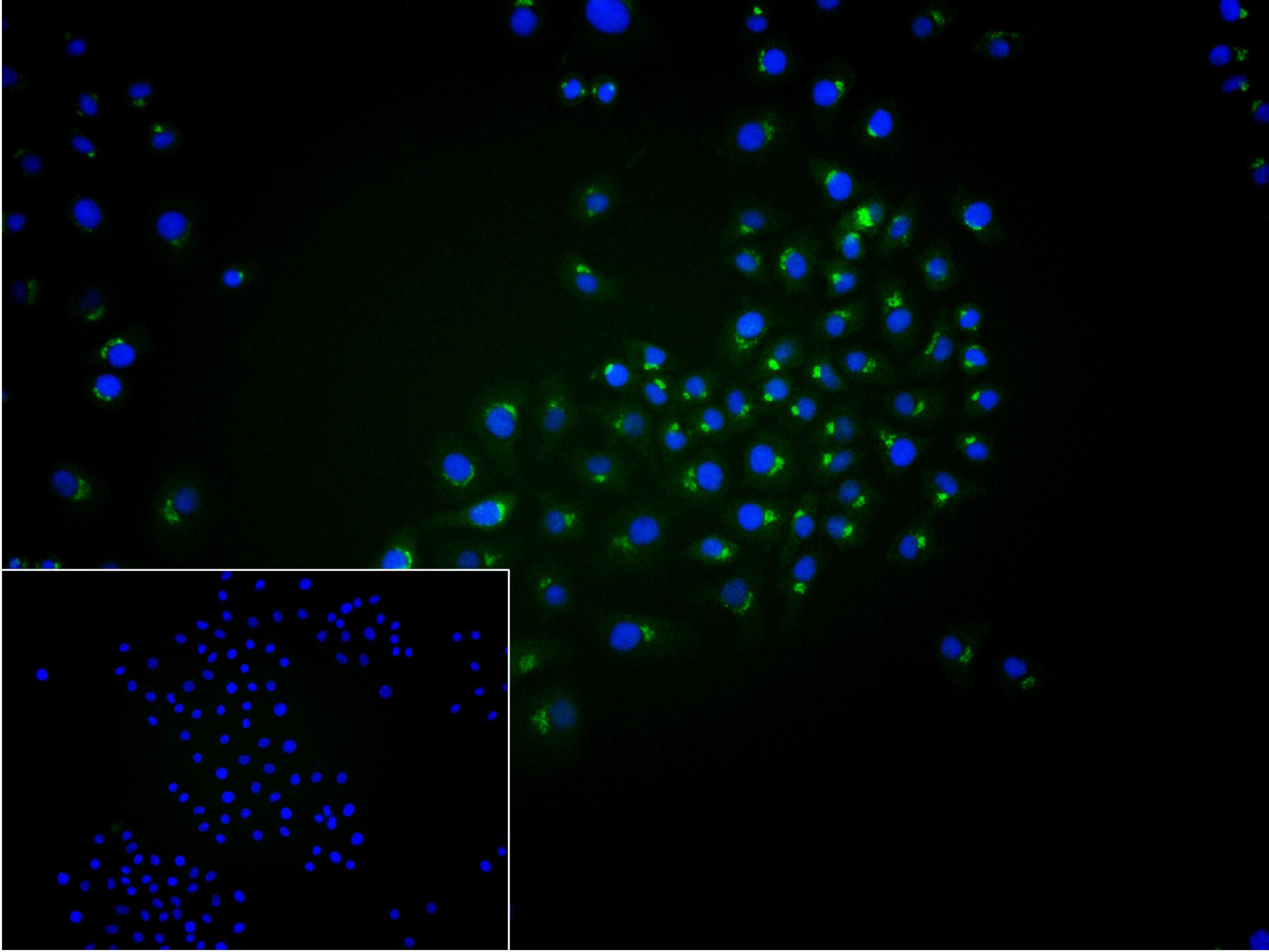
产品应用
| 应用 | 已检合格种属 | 预测种属 | 推荐稀释比例 |
|---|---|---|---|
| WB | Human | 1:500-2000 | |
| Flow-Cyt | Human | 1:50-100 | |
| ICC/IF | Human | 1:50-200 |
交叉反应
交叉反应: Human
相关产品
暂无相关产品
同靶标产品
相关文献
提示: 发表研究结果有使用 bsm-63199R 时请让我们知道,以便我们可以引用参考文章。作为回馈,资料提供者将获得我们送上的小礼品。