Dynein light chain 2, cytoplasmic Rabbit pAb (一抗) | Bioss
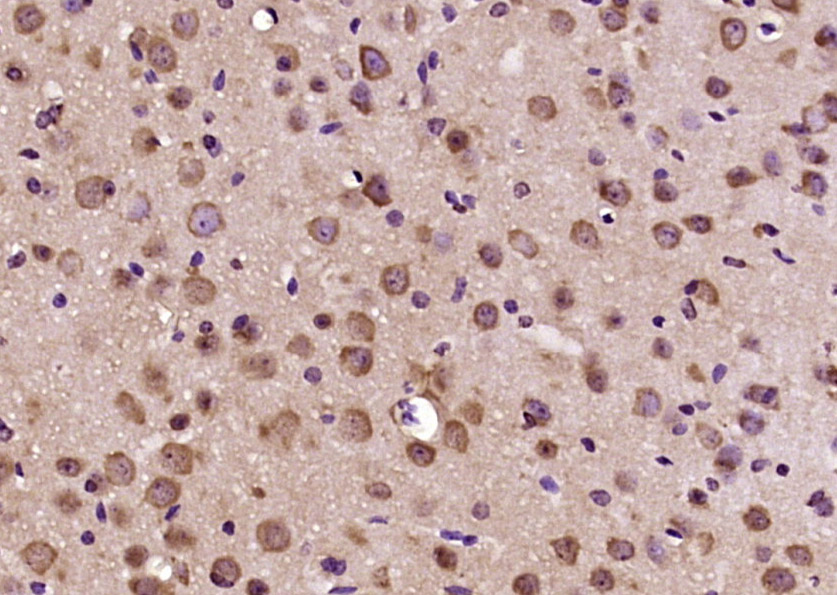
货号:bs-14469R
产品详情
相关标记
相关产品
相关文献
常见问题
概述
产品编号
bs-14469R
产品类型
宠物抗体、农牧业/家禽抗体
英文名称
Dynein light chain 2, cytoplasmic Rabbit pAb
中文名称
胞浆动力蛋白轻链2抗体
英文别名
DNCL1B; Dlc2; RSPH22; 1700064A15Rik; 6720463E02Rik; DLC8; DLC8b; DYL2_HUMAN; DYNLL2; 8 kDa dynein light chain b (DLC8b); Dynein light chain LC8-type 2; DYL2_MOUSE; 8 kDa dynein light chain b (DLC8 | DLC8b); DYL2_RAT;
抗体来源
Rabbit
免疫原
KLH conjugated synthetic peptide derived from human Dynein light chain 2: 1-89/89
亚型
IgG
性状
Liquid
纯化方法
affinity purified by Protein A
克隆类型
Polyclonal
理论分子量
10 kDa
浓度
1mg/ml
储存液
0.01M TBS (pH7.4) with 1% BSA, 0.02% Proclin300 and 50% Glycerol.
SWISS
Gene ID
保存条件
Shipped at 4℃. Store at -20℃ for one year. Avoid repeated freeze/thaw cycles.
注意事项
This product as supplied is intended for research use only, not for use in human, therapeutic or diagnostic applications.
数据库链接
背景资料
Dyneins are multisubunit, high molecular weight ATPases that interact with microtubules to generate force by converting the chemical energy of ATP into the mechanical energy of movement. Cytoplasmic or axonemal Dynein heavy, intermediate, light and light-intermediate chains are all components of minus end-directed motors; the complex transports cellular cargos towards the central region of the cell. The highly conserved DYNLL proteins were originally identified as light chains for microtubule-based motor protein Dynein. In mammals there are two closely related isoforms expressed, DYNLL1 and DYNLL2 which share 93% sequence identity at the protein level. DYNLL1 (Dynein light chain 1) also designated, DLC8 or PIN (Protein inhibitor of neuronal nitric oxide synthase) has been identified as a protein that interacts with NOS1 resulting in NOS1 inhibition. Dimerization is required for NOS1 activity and DYNLL1 has been shown to destabilize the NOS1 dimer. Nitric oxide may be involved in several processes such as apoptosis, synaptogenesis and neuronal development; thus DYNLL1 is implicated in these processes as well. DYNLL1 is a ubiquitously expressed protein that exhibits high expression in testis and moderate expression in brain. DYNLL2 (Dynein light chain 2) is subject to a unique alternative splicing event which is implicated in Myosin Va binding specificity.
产品应用
| 应用 | 已检合格种属 | 预测种属 | 推荐稀释比例 |
|---|---|---|---|
| IHC-P | Mouse | Human, Rat, Chicken, Dog, Horse | 1:100-500 |
| IHC-F | Mouse | Human, Rat, Chicken, Dog, Horse | 1:100-500 |
| IF | Mouse | Human, Rat, Chicken, Dog, Horse | 1:100-500 |
交叉反应
交叉反应: Mouse (predicted: Human, Rat, Chicken, Dog, Horse)
相关产品
暂无相关产品
靶标
基因名
DYNLL2
蛋白名
Dynein light chain 2, cytoplasmic
亚细胞定位
Cytoplasm, cytoskeleton.
相似性
Belongs to the dynein light chain family.
功能
Acts as one of several non-catalytic accessory components of the cytoplasmic dynein 1 complex that are thought to be involved in linking dynein to cargos and to adapter proteins that regulate dynein function. Cytoplasmic dynein 1 acts as a motor for the intracellular retrograde motility of vesicles and organelles along microtubules. May play a role in changing or maintaining the spatial distribution of cytoskeletal structures.
同靶标产品
相关文献
提示: 发表研究结果有使用 bs-14469R 时请让我们知道,以便我们可以引用参考文章。作为回馈,资料提供者将获得我们送上的小礼品。
具体参考文献:bs-14469R 被引用于1文献中