PD-L1 Recombinant Rabbit mAb (一抗) - WB | Bioss
概述
程序性死亡配体1(B7-H1)可以促进上皮细胞的恶性转化,保护表皮细胞免于失巢凋亡,在肿瘤的发生,进展和转归中发挥重要作用.
目前对CD274信号通路的进一步的研究必将为自身免疫性疾病、病毒感染性疾病和器官移植后排斥反应中T细胞介导的免疫应答调控提供了新的途径.B7-H1在癌症、类风湿、HIV感染等疾病中发现B7-H1有负调节作用。对B7-H1路径进行调控有助于自身免疫病及恶性肿瘤的治疗。
This gene encodes an immune inhibitory receptor ligand that is expressed by hematopoietic and non-hematopoietic cells, such as T cells and B cells and various types of tumor cells. The encoded protein is a type I transmembrane protein that has immunoglobulin V-like and C-like domains. Interaction of this ligand with its receptor inhibits T-cell activation and cytokine production. During infection or inflammation of normal tissue, this interaction is important for preventing autoimmunity by maintaining homeostasis of the immune response. In tumor microenvironments, this interaction provides an immune escape for tumor cells through cytotoxic T-cell inactivation. Expression of this gene in tumor cells is considered to be prognostic in many types of human malignancies, including colon cancer and renal cell carcinoma. Alternative splicing results in multiple transcript variants. [provided by RefSeq, Sep 2015]
Contains 1 Ig-like C2-type (immunoglobulin-like) domain.
Contains 1 Ig-like V-type (immunoglobulin-like) domain.
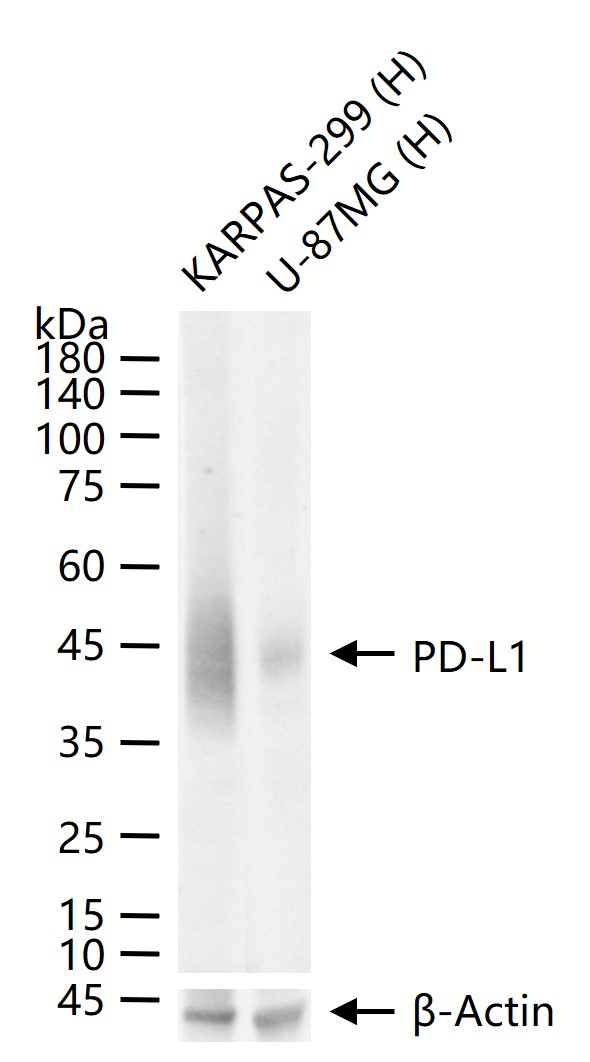
产品应用
| 应用 | 已检合格种属 | 预测种属 | 推荐稀释比例 |
|---|---|---|---|
| WB | Human | 1:500-2000 |
交叉反应
交叉反应: Human
相关产品
暂无相关产品