phospho-CDK9 (Thr186) Rabbit pAb (一抗) | Bioss
货号:bs-3097R
产品详情
相关标记
相关产品
相关文献
常见问题
概述
产品编号
bs-3097R
产品类型
磷酸化抗体、宠物抗体、农牧业/家禽抗体
英文名称
phospho-CDK9 (Thr186) Rabbit pAb
中文名称
磷酸化周期素依赖性激酶9抗体
英文别名
CDK9 (phospho-T186); p-CDK9; phospho-CDK9; CDK9 (phospho-Thr186); C-2k; CDC2L4; CTK1; PITALRE; TAK; CDK9_HUMAN; CDK9; Cell division cycle 2-like protein kinase 4; Cell division protein kinase 9; Serine/threonine-protein kinase PITALRE; Tat-associated kinase complex catalytic subunit; 2.7.11.22; 2.7.11.23; CDK9_MOUSE; CDK9_RAT;
抗体来源
Rabbit
免疫原
KLH conjugated Synthesised phosphopeptide derived from human CDK9 around the phosphorylation site of Thr186: RY(p-T)NR
亚型
IgG
性状
Liquid
纯化方法
affinity purified by Protein A
克隆类型
Polyclonal
理论分子量
43 kDa
检测分子量
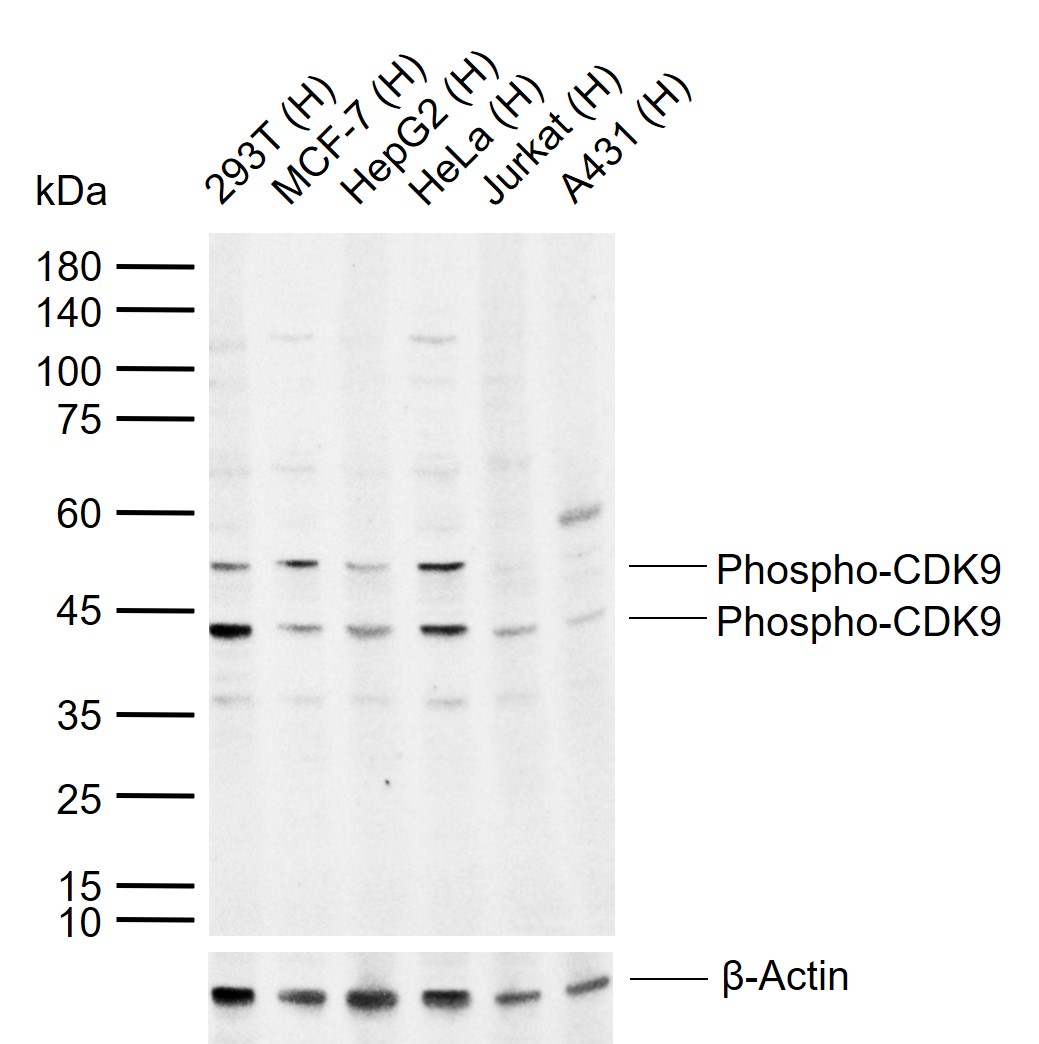
43,55 kDa
浓度
1mg/ml
储存液
0.01M TBS (pH7.4) with 1% BSA, 0.02% Proclin300 and 50% Glycerol.
研究领域
SWISS
Gene ID
保存条件
Shipped at 4℃. Store at -20℃ for one year. Avoid repeated freeze/thaw cycles.
注意事项
This product as supplied is intended for research use only, not for use in human, therapeutic or diagnostic applications.
数据库链接
产品介绍
Cdk9-周期素依赖激酶9(Cyclin Dependent Kinase 9),同样是参与细胞周期的调控,在细胞分化、有丝分裂中起重要作用。
背景资料
The protein encoded by this gene belongs to the highly conserved cyclin family, whose members are characterized by a dramatic periodicity in protein abundance through the cell cycle. Cyclins function as regulators of CDK kinases. Different cyclins exhibit distinct expression and degradation patterns which contribute to the temporal coordination of each mitotic event. This cyclin tightly associates with CDK9 kinase, and was found to be a major subunit of the transcription elongation factor p-TEFb. The kinase complex containing this cyclin and the elongation factor can interact with, and act as a cofactor of human immunodeficiency virus type 1 (HIV-1) Tat protein, and was shown to be both necessary and sufficient for full activation of viral transcription. This cyclin and its kinase partner were also found to be involved in the phosphorylation and regulation of the carboxy-terminal domain (CTD) of the largest RNA polymerase II subunit.
产品应用
| 应用 | 已检合格种属 | 预测种属 | 推荐稀释比例 |
|---|---|---|---|
| WB | Human, Mouse | Rat, Pig, Cow, Chicken, Dog, Horse | 1:500-2000 |
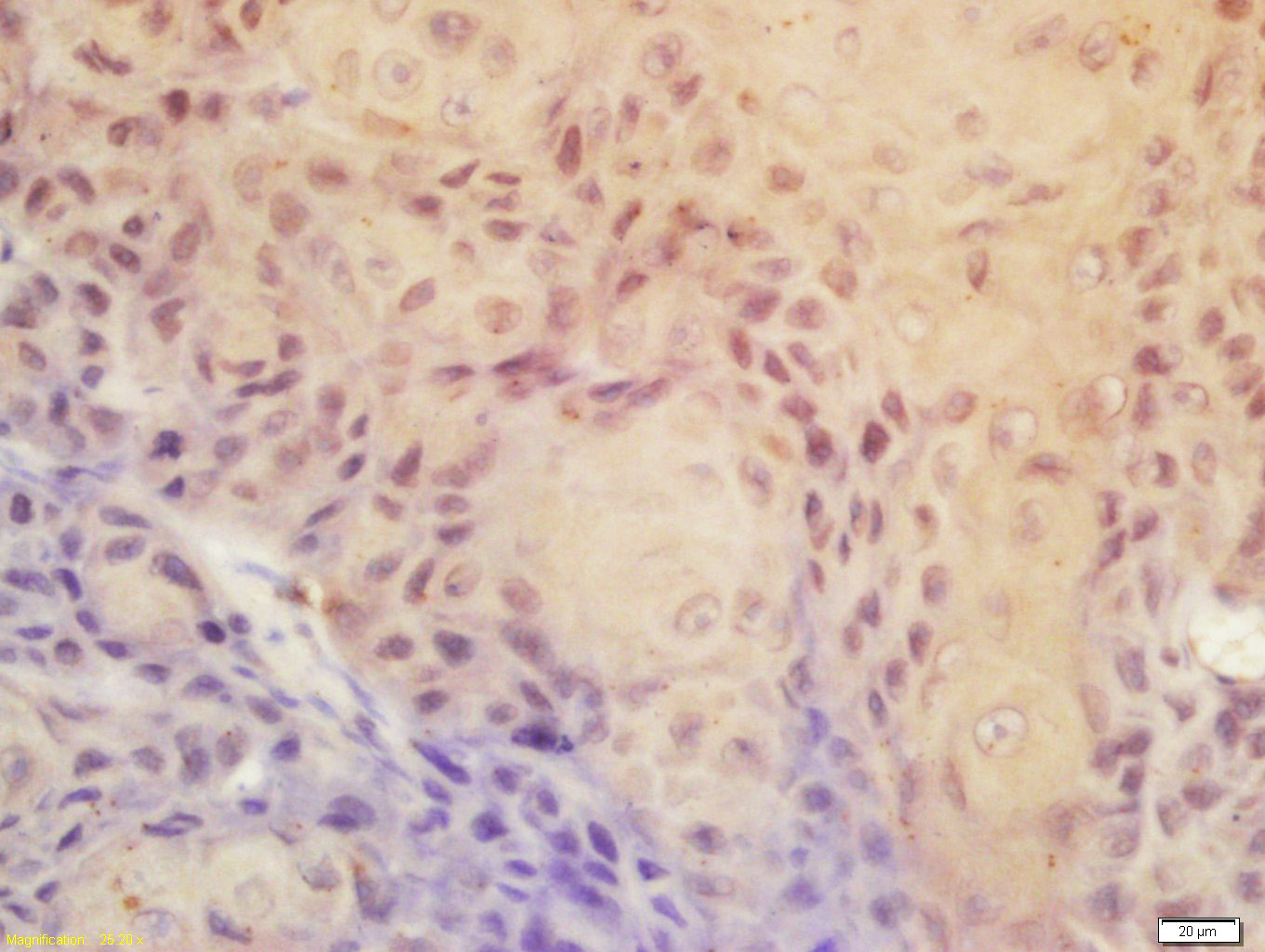
| IHC-P | Human | Mouse, Rat, Pig, Cow, Chicken, Dog, Horse | 1:100-500 |
| IHC-F | Human | Mouse, Rat, Pig, Cow, Chicken, Dog, Horse | 1:100-500 |
| IF | Human | Mouse, Rat, Pig, Cow, Chicken, Dog, Horse | 1:100-500 |
交叉反应
交叉反应: Human, Mouse (predicted: Rat, Pig, Cow, Chicken, Dog, Horse)
相关产品
暂无相关产品
靶标
基因名
CDK9
蛋白名
Cyclin-dependent kinase 9
亚基
Associates with CCNT1/cyclin-T1, CCNT2/cyclin-T2 (isoform A and isoform B) or CCNK/cyclin-K to form active P-TEFb. P-TEFb forms a complex with AFF4/AF5Q31. Component of a complex which is composed of at least 5 members: HTATSF1/Tat-SF1, P-TEFb complex, RNA pol II, SUPT5H, and NCL/nucleolin. Associates with UBR5 and forms a transcription regulatory complex composed of CDK9, RNAP II, UBR5 and TFIIS/TCEA1 that can stimulate target gene transcription (e.g. gamma fibrinogen/FGG) by recruiting their promoters. Component of the 7SK snRNP inactive complex which is composed of at least 8 members: P-TEFb (composed of CDK9 and CCNT1/cyclin-T1), HEXIM1, HEXIM2, LARP7, BCDIN3, SART3 proteins and 7SK and U6 snRNAs. This inactive 7SK snRNP complex can also interact with NCOR1 and HDAC3, probably to regulate CDK9 acetylation. Release of P-TEFb from P-TEFb/7SK snRNP complex requires both PP2B to transduce calcium Ca(2+) signaling in response to stimuli (e.g. UV or hexamethylene bisacetamide (HMBA)), and PPP1CA to dephosphorylate Thr-186. This released P-TEFb remains inactive in the preinitiation complex with BRD4 until new Thr-186 phosphorylation occurs after the synthesis of a short RNA. Binds to BRD4, probably to target chromatin binding. Interacts with the acidic/proline-rich region of HIV-1 and HIV-2 Tat via T-loop region, and is thus required for HIV to hijack host transcription machinery during its replication through cooperative binding to viral TAR RNA. Interacts with activated nuclear STAT3 and RELA/p65. Binds to AR and MYOD1. Forms a complex composed of CDK9, CCNT1/cyclin-T1, EP300 and GATA4 that stimulates hypertrophy in cardiomyocytes. Isoform 3 binds to KU70/XRCC6.
亚细胞定位
Nucleus. Cytoplasm. Nucleus, PML body. Note=Accumulates on chromatin in response to replication stress. Complexed with CCNT1 in nuclear speckles, but uncomplexed form in the cytoplasm. The translocation from nucleus to cytoplasm is XPO1/CRM1-dependent. Associates with PML body when acetylated.
组织特异性
Ubiquitous.
翻译后修饰
Autophosphorylation at Thr-186, Ser-347, Thr-350, Ser-353, Thr-354 and Ser-357 triggers kinase activity by promoting cyclin and substrate binding (e.g. HIV TAT) upon conformational changes. Thr-186 phosphorylation requires the calcium Ca(2+) signaling pathway, including CaMK1D and calmodulin. This inhibition is relieved by Thr-29 dephosphorylation. However, phosphorylation at Thr-29 is inhibitory within the HIV transcription initiation complex. Phosphorylation at Ser-175 inhibits kinase activity. Can be phosphorylated on either Thr-362 or Thr-363 but not on both simultaneously (PubMed:18566585).
Dephosphorylation of Thr-186 by PPM1A and PPM1B blocks CDK9 activity and may lead to CDK9 proteasomal degradation. However, PPP1CA-mediated Thr-186 dephosphorylation is required to release P-TEFb from its inactive P-TEFb/7SK snRNP complex. Dephosphorylation of C-terminus Thr and Ser residues by protein phosphatase-1 (PP1) triggers CDK9 activity, contributing to the activation of HIV-1 transcription.
N6-acetylation of Lys-44 by CBP/p300 promotes kinase activity, whereas acetylation of both Lys-44 and Lys-48 mediated by PCAF/KAT2B and GCN5/KAT2A reduces kinase activity. The acetylated form associates with PML bodies in the nuclear matrix and with the transcriptionally silent HIV-1 genome; deacetylated upon transcription stimulation.
Polyubiquitinated and thus activated by UBR5. This ubiquitination is promoted by TFIIS/TCEA1 and favors 'Ser-2' phosphorylation of RPB1/POLR2A CTD.
Dephosphorylation of Thr-186 by PPM1A and PPM1B blocks CDK9 activity and may lead to CDK9 proteasomal degradation. However, PPP1CA-mediated Thr-186 dephosphorylation is required to release P-TEFb from its inactive P-TEFb/7SK snRNP complex. Dephosphorylation of C-terminus Thr and Ser residues by protein phosphatase-1 (PP1) triggers CDK9 activity, contributing to the activation of HIV-1 transcription.
N6-acetylation of Lys-44 by CBP/p300 promotes kinase activity, whereas acetylation of both Lys-44 and Lys-48 mediated by PCAF/KAT2B and GCN5/KAT2A reduces kinase activity. The acetylated form associates with PML bodies in the nuclear matrix and with the transcriptionally silent HIV-1 genome; deacetylated upon transcription stimulation.
Polyubiquitinated and thus activated by UBR5. This ubiquitination is promoted by TFIIS/TCEA1 and favors 'Ser-2' phosphorylation of RPB1/POLR2A CTD.
疾病
Note=Chronic activation of CDK9 causes cardiac myocyte enlargement leading to cardiac hypertrophy, and confers predisposition to heart failure.
相似性
Belongs to the protein kinase superfamily. CMGC Ser/Thr protein kinase family. CDC2/CDKX subfamily.
Contains 1 protein kinase domain.
Contains 1 protein kinase domain.
功能
Protein kinase involved in the regulation of transcription. Member of the cyclin-dependent kinase pair (CDK9/cyclin-T) complex, also called positive transcription elongation factor b (P-TEFb), which facilitates the transition from abortive to productive elongation by phosphorylating the CTD (C-terminal domain) of the large subunit of RNA polymerase II (RNAP II) POLR2A, SUPT5H and RDBP. This complex is inactive when in the 7SK snRNP complex form. Phosphorylates EP300, MYOD1, RPB1/POLR2A and AR, and the negative elongation factors DSIF and NELF. Regulates cytokine inducible transcription networks by facilitating promoter recognition of target transcription factors (e.g. TNF-inducible RELA/p65 activation and IL-6-inducible STAT3 signaling). Promotes RNA synthesis in genetic programs for cell growth, differentiation and viral pathogenesis. P-TEFb is also involved in cotranscriptional histone modification, mRNA processing and mRNA export. Modulates a complex network of chromatin modifications including histone H2B monoubiquitination (H2Bub1), H3 lysine 4 trimethylation (H3K4me3) and H3K36me3; integrates phosphorylation during transcription with chromatin modifications to control co-transcriptional histone mRNA processing. The CDK9/cyclin-K complex has also a kinase activity towards CTD of RNAP II and can substitute for CDK9/cyclin-T P-TEFb in vitro. Replication stress response protein; the CDK9/cyclin-K complex is required for genome integrity maintenance, by promoting cell cycle recovery from replication arrest and limiting single-stranded DNA amount in response to replication stress, thus reducing the breakdown of stalled replication forks and avoiding DNA damage. In addition, probable function in DNA repair of isoform 2 via interaction with KU70/XRCC6. Promotes cardiac myocyte enlargement. RPB1/POLR2A phosphorylation on 'Ser-2' in CTD activates transcription. AR phosphorylation modulates AR transcription factor promoter selectivity and cell growth. DSIF and NELF phosphorylation promotes transcription by inhibiting their negative effect. The phosphorylation of MYOD1 enhances its transcriptional activity and thus promotes muscle differentiation.
同靶标产品
相关文献
提示: 发表研究结果有使用 bs-3097R 时请让我们知道,以便我们可以引用参考文章。作为回馈,资料提供者将获得我们送上的小礼品。