phospho-POLR2A (Ser2) Recombinant Rabbit mAb (一抗) - WB,IHC-P,IHC-F,IF,Flow-Cyt,ICC/IF,IP | Bioss
Rrmab?兔单抗
货号:bsm-62939R
产品详情
相关标记
相关产品
相关文献
常见问题
概述
产品编号
bsm-62939R
产品类型
磷酸化抗体、重组兔单抗、mIHC精品抗体
英文名称
phospho-POLR2A (Ser2) Recombinant Rabbit mAb
中文名称
磷酸化RNA聚合酶II CTD重组兔单抗
英文别名
NEDHIB; POLR2; POLRA; RPB1; RPBh1; RPO2; RPOL2; RpIILS; hRPB220; hsRPB1; 220kDa; Rpo2-1; RPB1_HUMAN; POLR2A; RNA polymerase II subunit B1; 3'-5' exoribonuclease; DNA-directed RNA polymerase II subunit A; DNA-directed RNA polymerase III largest subunit; RNA-directed RNA polymerase II subunit RPB1; 2.7.7.6; RPB1_MOUSE; Rpii215; RNA polymerase II subunit A; polymerase (RNA) II (DNA directed) polypeptide A, 220kDa; DNA-directed RNA polymerase II largest subunit, RNA polymerase II 220 kd subunit; POLR2A (phospho-S2); p-POLR2A; phospho-POLR2A; POLR2A (phospho-Ser2)
抗体来源
Rabbit
免疫原
A synthesized peptide derived from human POLR2A around the phosphorylation site of S2: Y-pS-PTSPS
亚型
IgG
性状
Liquid
纯化方法
affinity purified by Protein A
克隆类型
Recombinant
克隆号
5A2
理论分子量
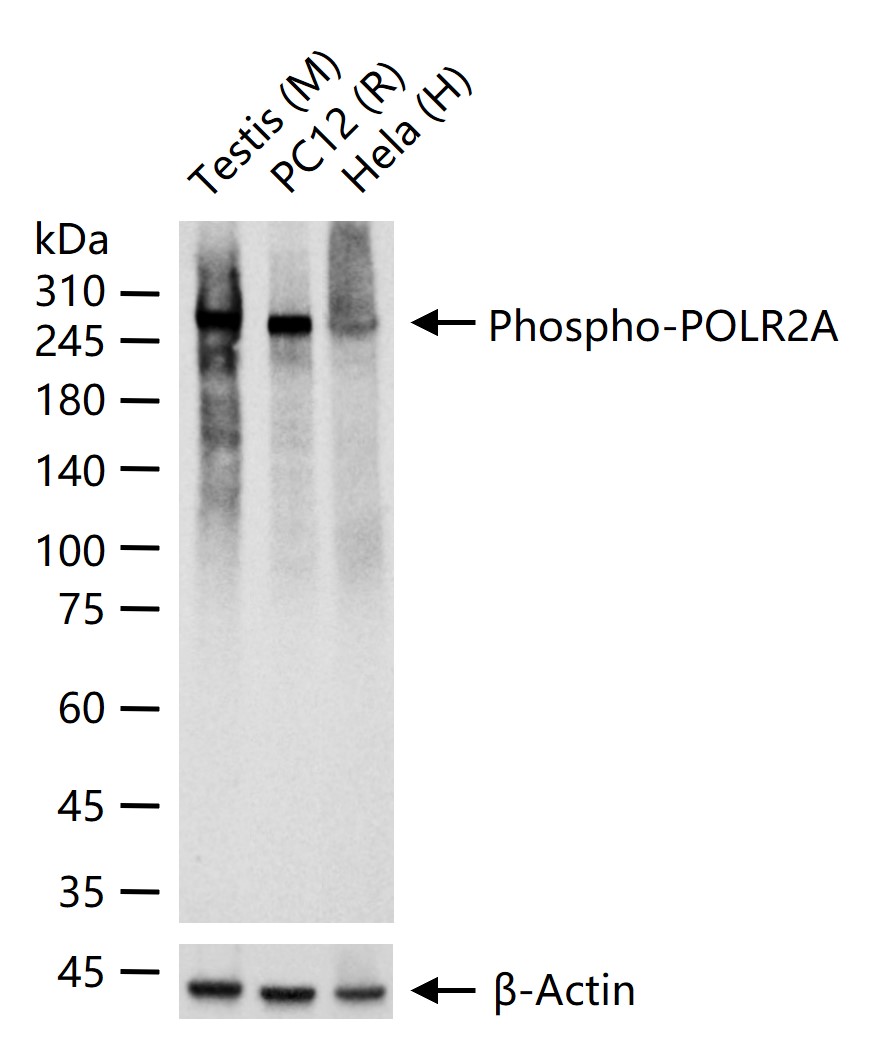
217 kDa
检测分子量
250 kDa
储存液
10mM phosphate buffered saline(pH 7.4) with 150mM sodium chloride, 0.05% BSA, 0.02% Proclin300 and 50% glycerol.
研究领域
SWISS
Gene ID
保存条件
Store at 4℃ for short term. Store at -20℃ for long term. Avoid repeated freeze/thaw cycles.
注意事项
This product as supplied is intended for research use only, not for use in human, therapeutic or diagnostic applications.
数据库链接
背景资料
During transcription elongation, Pol II moves on the template as the transcript elongates. Elongation is influenced by the phosphorylation status of the C-terminal domain (CTD) of Pol II largest subunit (RPB1), which serves as a platform for assembly of factors that regulate transcription initiation, elongation, termination and mRNA processing.
基因名
POLR2A
蛋白名
DNA-directed RNA polymerase II subunit RPB1
亚基
Component of the RNA polymerase II (Pol II) complex consisting of 12 subunits. The phosphorylated C-terminal domain interacts with FNBP3 and SYNCRIP. Interacts with SAFB/SAFB1. Interacts with CCNL1 and MYO1C (By similarity). Interacts with CCNL2 and SFRS19. Component of a complex which is at least composed of HTATSF1/Tat-SF1, the P-TEFb complex components CDK9 and CCNT1, RNA polymerase II, SUPT5H, and NCL/nucleolin. Interacts with PAF1. Interacts (via C-terminus) with FTSJD2, CTDSP1 and SCAF8. Interacts via the phosphorylated C-terminal domain with WDR82 and with SETD1A and SETD1B only in the presence of WDR82. Interacts with ATF7IP. When phosphorylated at 'Ser-5', interacts with MEN1; the unphosphorylated form, or phosphorylated at 'Ser-2' does not interact. Interacts with DDX5.
亚细胞定位
Nucleus.
翻译后修饰
Dephosphorylated by the protein phosphatase CTDSP1. [PTM] Ubiquitinated by WWP2 leading to proteasomal degradation (By similarity). [PTM] Methylated at Arg-1810 by CARM1. Methylation occurs only when the CTD is hypophosphorylated, and phosphorylation at Ser-1805 and Ser-1808 prevent methylation (in vitro). It is assumed that methylation occurs prior to phosphorylation and transcription initiation. CTD methylation may facilitate the expression of select RNAs.
疾病
Defects in EIF2B3 are a cause of leukodystrophy with vanishing white matter (VWM) [MIM:603896]. VWM is a leukodystrophy that occurs mainly in children. Neurological signs include progressive cerebellar ataxia, spasticity, inconstant optic atrophy and relatively preserved mental abilities. The disease is chronic-progressive with, in most individuals, additional episodes of rapid deterioration following febrile infections or minor head trauma. While childhood onset is the most common form of the disorder, some severe forms are apparent at birth. A severe, early-onset form seen among the Cree and Chippewayan populations of Quebec and Manitoba is called Cree leukoencephalopathy. Milder forms may not become evident until adolescence or adulthood. Some females with milder forms of the disease who survive to adolescence exhibit ovarian dysfunction. This variant of the disorder is called ovarioleukodystrophy.
相似性
Belongs to the RNA polymerase beta' chain family.
功能
DNA-dependent RNA polymerase catalyzes the transcription of DNA into RNA using the four ribonucleoside triphosphates as substrates. Largest and catalytic component of RNA polymerase II which synthesizes mRNA precursors and many functional non-coding RNAs. Forms the polymerase active center together with the second largest subunit. Pol II is the central component of the basal RNA polymerase II transcription machinery. It is composed of mobile elements that move relative to each other. RPB1 is part of the core element with the central large cleft, the clamp element that moves to open and close the cleft and the jaws that are thought to grab the incoming DNA template. At the start of transcription, a single stranded DNA template strand of the promoter is positioned within the central active site cleft of Pol II. A bridging helix emanates from RPB1 and crosses the cleft near the catalytic site and is thought to promote translocation of Pol II by acting as a ratchet that moves the RNA-DNA hybrid through the active site by switching from straight to bent conformations at each step of nucleotide addition. During transcription elongation, Pol II moves on the template as the transcript elongates. Elongation is influenced by the phosphorylation status of the C-terminal domain (CTD) of Pol II largest subunit (RPB1), which serves as a platform for assembly of factors that regulate transcription initiation, elongation, termination and mRNA processing. Acts as a RNA-dependent RNA polymerase when associated with small delta antigen of Hepatitis delta virus, acting both as a replicate and transcriptase for the viral RNA circular genome.
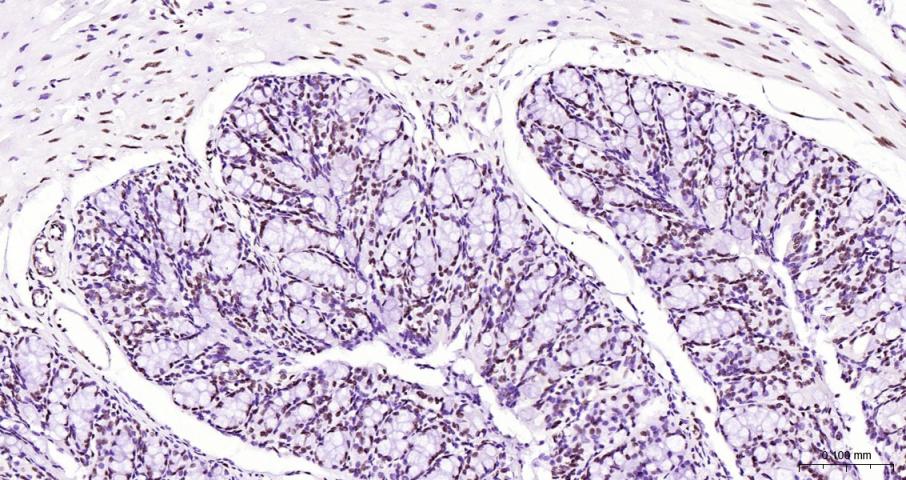
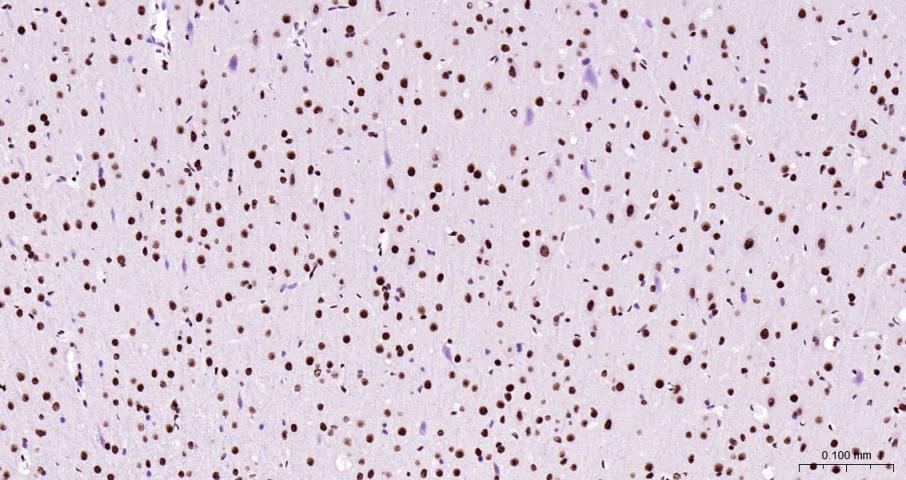
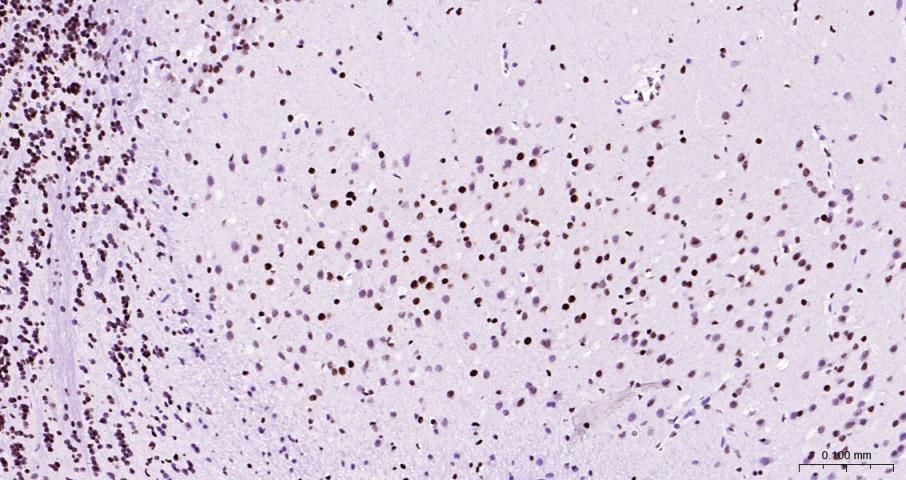
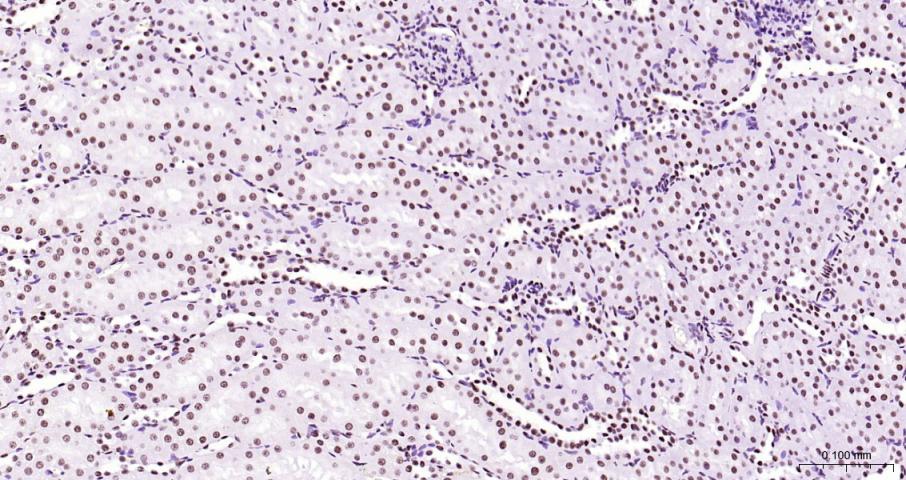
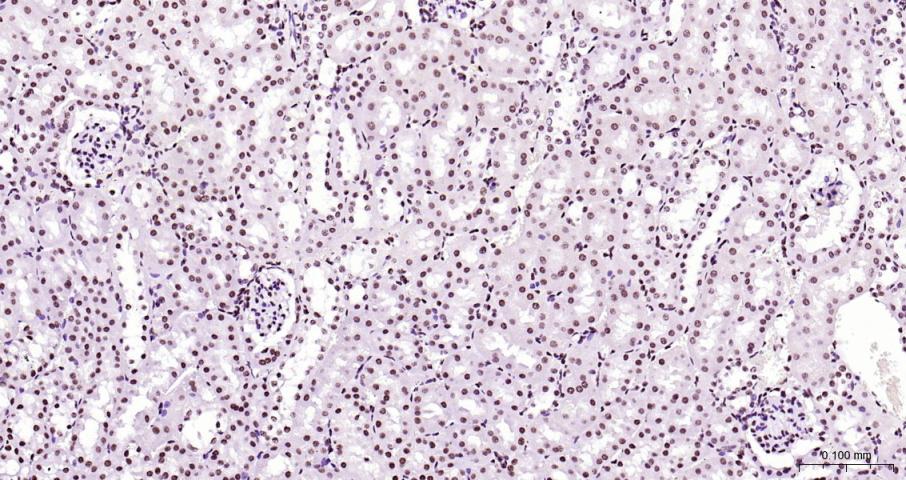
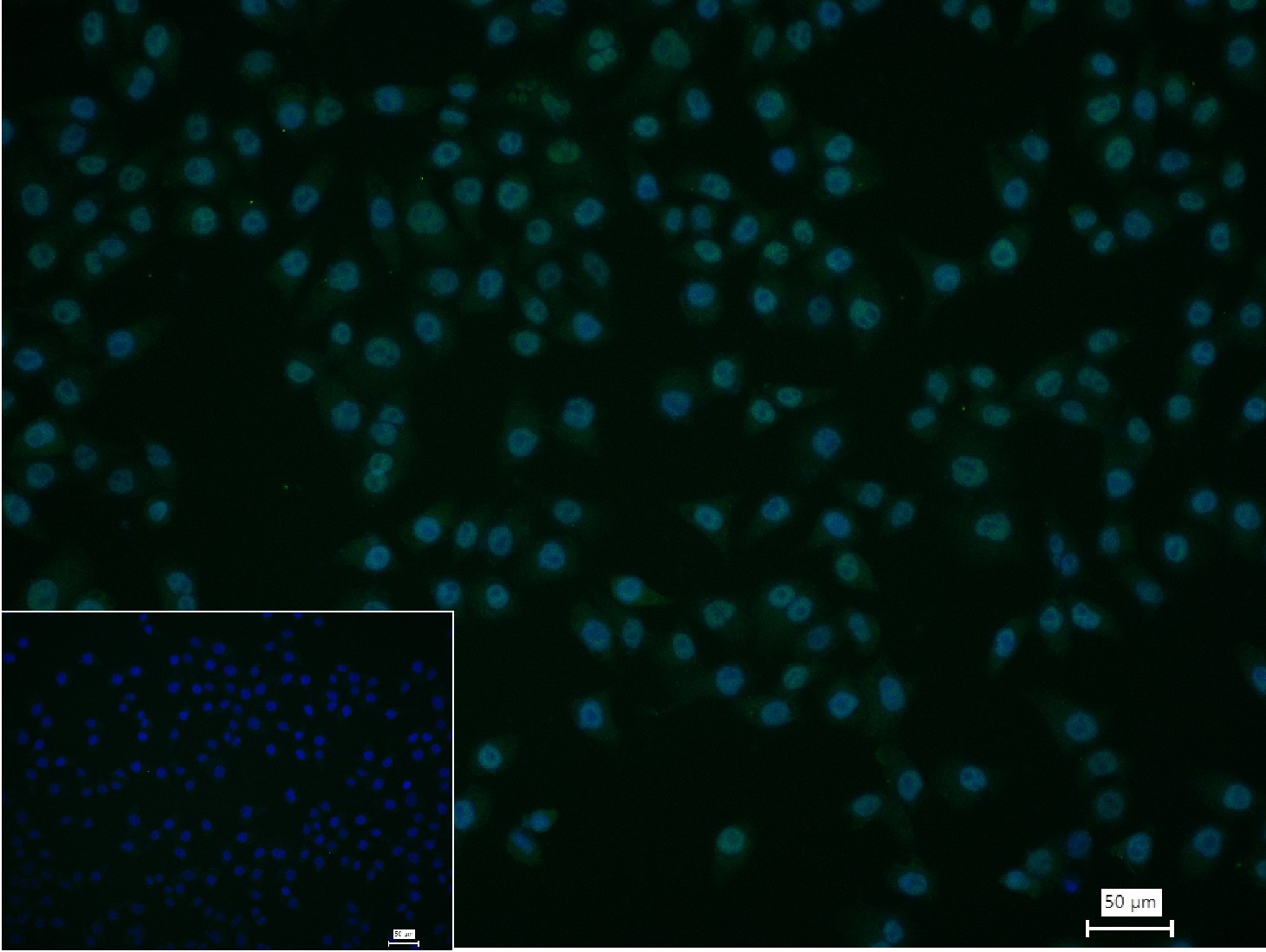
产品应用
| 应用 | 已检合格种属 | 预测种属 | 推荐稀释比例 |
|---|---|---|---|
| WB | Human, Mouse, Rat | 1:500-2000 | |
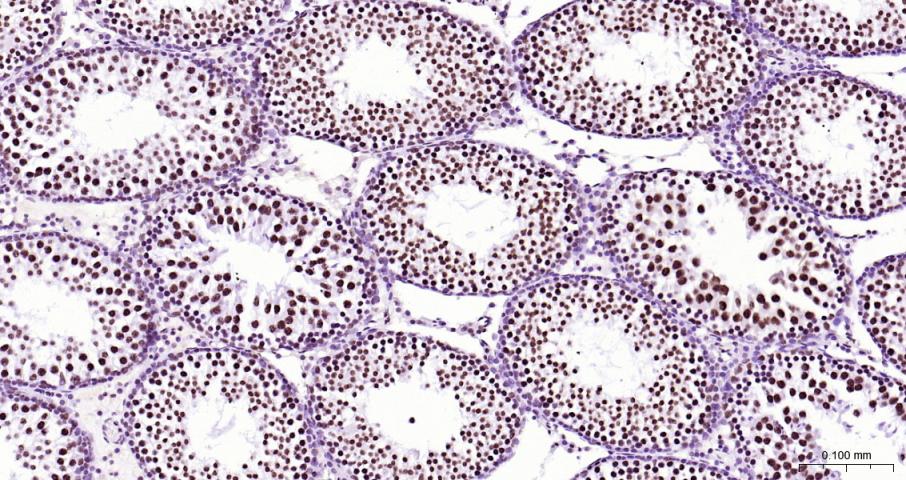
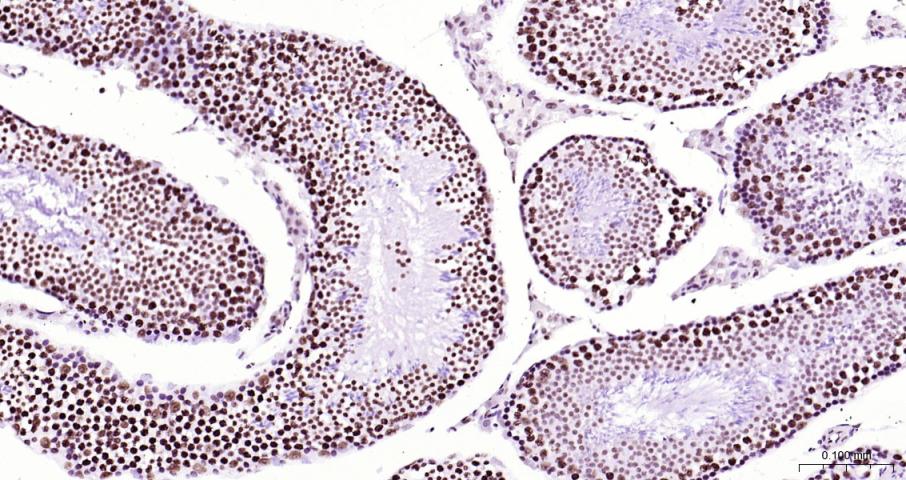
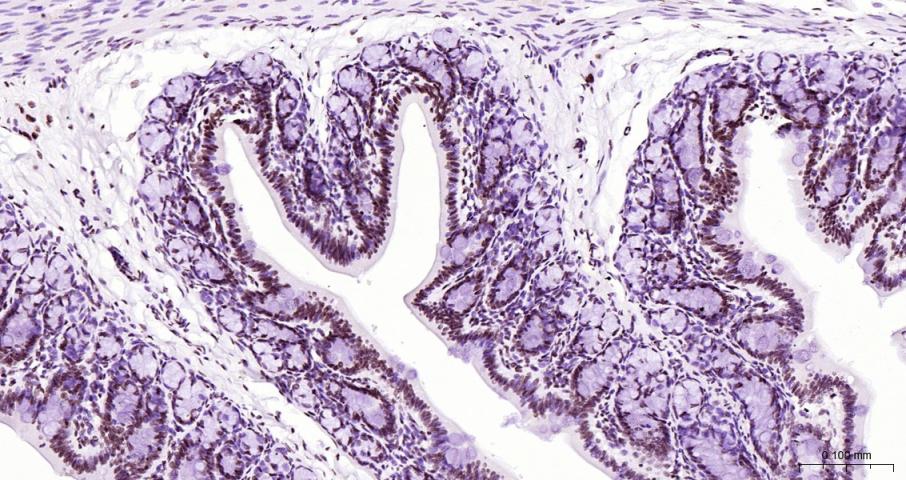
| IHC-P | Mouse, Rat | Human | 1:100-500 |
| IHC-F | Mouse, Rat | Human | 1:100-500 |
| IF | Mouse, Rat | Human | 1:100-500 |
| Flow-Cyt | Human, Mouse, Rat | 1:50-100 | |
| ICC/IF | Human | Mouse, Rat | 1:50-200 |
| IP | Human, Mouse, Rat | 1:20-50 |
交叉反应
交叉反应: Human, Mouse, Rat
相关产品
暂无相关产品
同靶标产品
相关文献
提示: 发表研究结果有使用 bsm-62939R 时请让我们知道,以便我们可以引用参考文章。作为回馈,资料提供者将获得我们送上的小礼品。