ITCH/AIP4 Recombinant Rabbit mAb (一抗) - Flow-Cyt,ICC/IF | Bioss
Rrmab?兔单抗
货号:bsm-62844R
产品详情
相关标记
相关产品
相关文献
常见问题
概述
产品编号
bsm-62844R
产品类型
重组兔单抗
英文名称
ITCH/AIP4 Recombinant Rabbit mAb
中文名称
激活素受体相互作用蛋白4重组兔单抗
英文别名
ADMFD; AIF4; AIP4; NAPP1; 6720481N21Rik; 8030492O04Rik; A130065M08; C230047C07Rik; ITCH_HUMAN; ITCH; Atrophin-1-interacting protein 4 (AIP4); HECT-type E3 ubiquitin transferase Itchy homolog; NFE2-associated polypeptide 1 (NAPP1); 2.3.2.26; ITCH_MOUSE; itchy E3 ubiquitin protein ligase; itchy (mouse homolog) E3 ubiquitin protein ligase; itchy E3 ubiquitin protein ligase homolog (mouse)
抗体来源
Rabbit
免疫原
A synthesized peptide derived from human ITCH: 800-850
亚型
IgG
性状
Liquid
纯化方法
affinity purified by Protein A
克隆类型
Recombinant
克隆号
12A12
理论分子量
103 kDa
检测分子量
103 kDa
储存液
10mM phosphate buffered saline(pH 7.4) with 150mM sodium chloride, 0.05% BSA, 0.02% Proclin300 and 50% glycerol.
研究领域
SWISS
Gene ID
保存条件
Store at 4℃ for short term. Store at -20℃ for long term. Avoid repeated freeze/thaw cycles.
注意事项
This product as supplied is intended for research use only, not for use in human, therapeutic or diagnostic applications.
数据库链接
背景资料
Acts as an E3 ubiquitin-protein ligase which accepts ubiquitin from an E2 ubiquitin-conjugating enzyme in the form of a thioester and then directly transfers the ubiquitin to targeted substrates.
基因名
ITCH
蛋白名
E3 ubiquitin-protein ligase Itchy homolog
亚细胞定位
Cell membrane. Cytoplasm. Nucleus. Associates with endocytic vesicles. May be recruited to exosomes by NDFIP1.
组织特异性
Widely expressed.
翻译后修饰
On T-cell activation, phosphorylation by the JNK cascade on serine and threonine residues surrounding the PRR domain accelerates the ubiquitination and degradation of JUN and JUNB. The increased ITCH catalytic activity due to phosphorylation by JNK1 may occur due to a conformational change disrupting the interaction between the PRR/WW motifs domain and the HECT domain and, thus exposing the HECT domain (By similarity). Phosphorylation by FYN reduces interaction with JUNB and negatively controls JUN ubiquitination and degradation.
Ubiquitinated; autopolyubiquitination with 'Lys-63' linkages which does not lead to protein degradation.
Ubiquitinated; autopolyubiquitination with 'Lys-63' linkages which does not lead to protein degradation.
疾病
Defects in ITCH are the cause of syndromic multisystem autoimmune disease (SMAD) [MIM:613385]. SMAD is characterized by organomegaly, failure to thrive, developmental delay, dysmorphic features and autoimmune inflammatory cell infiltration of the lungs, liver and gut.
相似性
Contains 1 C2 domain.
Contains 1 HECT (E6AP-type E3 ubiquitin-protein ligase) domain.
Contains 4 WW domains.
Contains 1 HECT (E6AP-type E3 ubiquitin-protein ligase) domain.
Contains 4 WW domains.
功能
Acts as an E3 ubiquitin-protein ligase which accepts ubiquitin from an E2 ubiquitin-conjugating enzyme in the form of a thioester and then directly transfers the ubiquitin to targeted substrates. It catalyzes 'Lys-29'-, 'Lys-48'- and 'Lys-63'-linked ubiquitin conjugation. It is involved in the control of inflammatory signaling pathways. Is an essential component of a ubiquitin-editing protein complex, comprising also TNFAIP3, TAX1BP1 and RNF11, that ensures the transient nature of inflammatory signaling pathways. Promotes the association of the complex after TNF stimulation. Once the complex is formed, TNFAIP3 deubiquitinates 'Lys-63' polyubiquitin chains on RIPK1 and catalyzes the formation of 'Lys-48'-polyubiquitin chains. This leads to RIPK1 proteasomal degradation and consequently termination of the TNF- or LPS-mediated activation of NFKB1. Ubiquitinates RIPK2 by 'Lys-63'-linked conjugation and influences NOD2-dependent signal transduction pathways. Regulates the transcriptional activity of several transcription factors, and probably plays an important role in the regulation of immune response. Ubiquitinates NFE2 by 'Lys-63' linkages and is implicated in the control of the development of hematopoietic lineages. Critical regulator of T-helper (TH2) cytokine development through its ability to induce JUNB ubiquitination and degradation (By similarity). Ubiquitinates SNX9. Ubiquitinates CXCR4 and HGS/HRS and regulates sorting of CXCR4 to the degradative pathway. It is involved in the negative regulation of MAVS-dependent cellular antiviral responses. Ubiquitinates MAVS through 'Lys-48'-linked conjugation resulting in MAVS proteasomal degradation. Involved in the regulation of apoptosis and reactive oxygen species levels through the ubiquitination and proteasomal degradation of TXNIP. Mediates the antiapoptotic activity of epidermal growth factor through the ubiquitination and proteasomal degradation of p15 BID. Targets DTX1 for lysosomal degradation and controls NOTCH1 degradation, in the absence of ligand, through 'Lys-29'-linked polyubiquitination. Ubiquitinates BRAT1 and this ubiquitination is enhanced in the presence of NDFIP1.
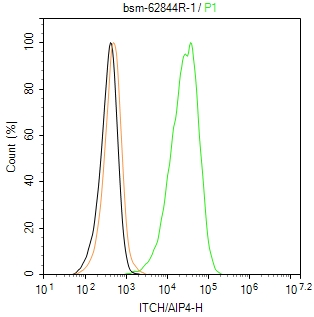
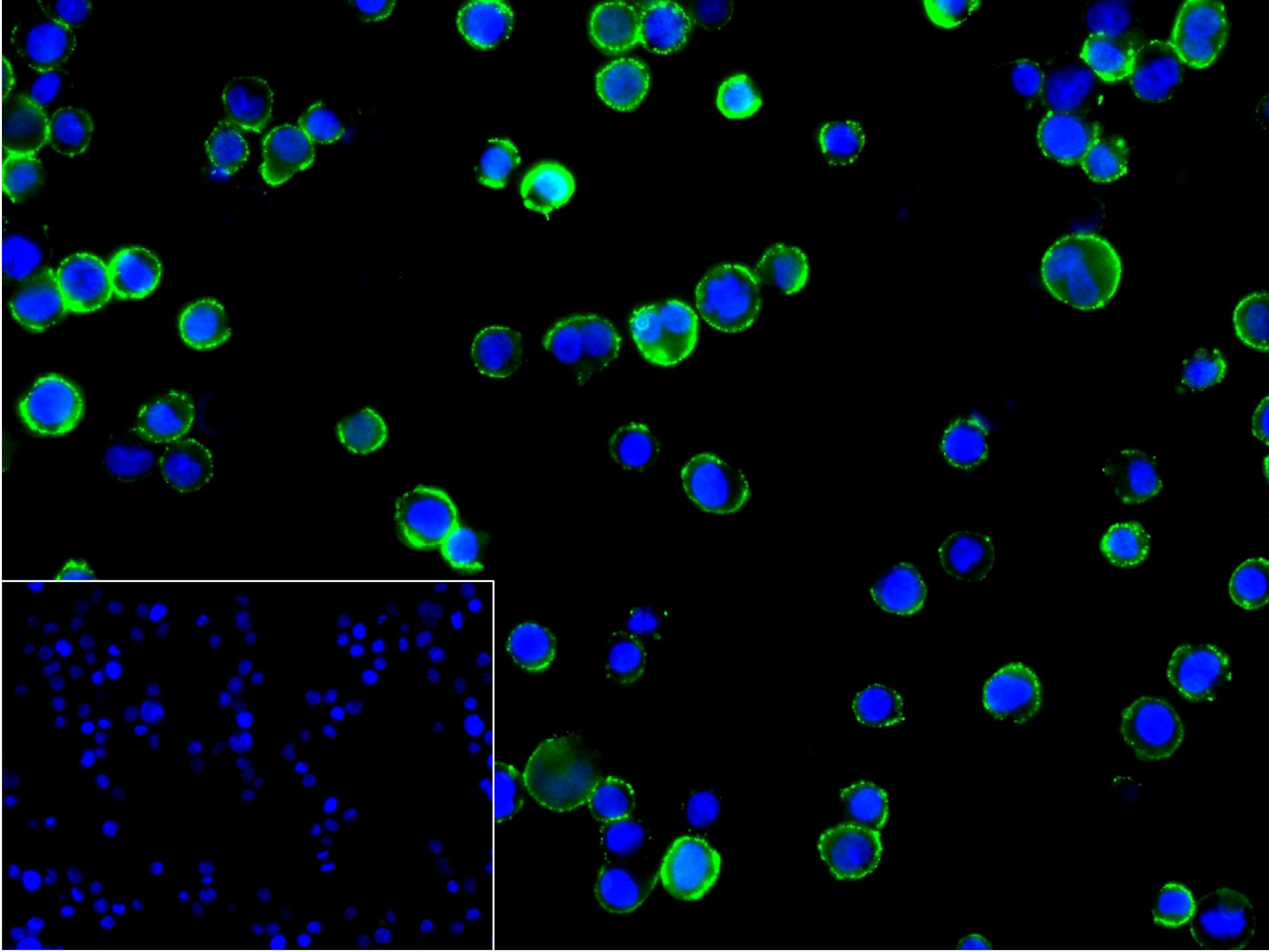
产品应用
| 应用 | 已检合格种属 | 预测种属 | 推荐稀释比例 |
|---|---|---|---|
| Flow-Cyt | Human | Mouse, Rat | 1:50-100 |
| ICC/IF | Human | Mouse, Rat | 1:100-500 |
交叉反应
交叉反应: Human (predicted: Mouse, Rat)
相关产品
暂无相关产品
同靶标产品
相关文献
提示: 发表研究结果有使用 bsm-62844R 时请让我们知道,以便我们可以引用参考文章。作为回馈,资料提供者将获得我们送上的小礼品。