Band3 Recombinant Rabbit mAb (一抗) - IHC-P,IHC-F,IF | Bioss
Rrmab?兔单抗
货号:bsm-61887R
产品详情
相关标记
相关产品
相关文献
常见问题
概述
产品编号
bsm-61887R
产品类型
重组兔单抗、mIHC精品抗体
英文名称
Band3 Recombinant Rabbit mAb
中文名称
红细胞阴离子交换蛋白1重组兔单抗
英文别名
B3AT_HUMAN; SLC4A1; Anion exchange protein 1 (AE 1 | Anion exchanger 1); Solute carrier family 4 member 1; AE1; DI; EPB3; BND3; CD233; CHC; EMPB3; FR; RTA1A; SAO; SPH4; SW; WD; WD1; WR; solute carrier family 4 member 1 (Diego blood group); Waldner blood group; erythrocyte membrane protein band 3; Diego blood group; solute carrier family 4, anion exchanger, member 1 (erythrocyte membrane protein band 3, Diego blood group); solute carrier family 4 (anion exchanger), member 1; solute carrier family 4 (anion exchanger), member 1 (Diego blood group); Froese blood group; Swann blood group; Wright blood group; Band 3 anion transport protein
抗体来源
Rabbit
免疫原
A synthesized peptide derived from human SLC4A1: 20-70/911
亚型
IgG
性状
Liquid
纯化方法
affinity purified by Protein A
克隆类型
Recombinant
克隆号
5F11
理论分子量
102 kDa
检测分子量
102 kDa
储存液
10mM phosphate buffered saline(pH 7.4) with 150mM sodium chloride, 0.05% BSA, 0.02% Proclin300 and 50% glycerol.
SWISS
Gene ID
保存条件
Store at 4℃ for short term. Store at -20℃ for long term. Avoid repeated freeze/thaw cycles.
注意事项
This product as supplied is intended for research use only, not for use in human, therapeutic or diagnostic applications.
背景资料
Functions both as a transporter that mediates electroneutral anion exchange across the cell membrane and as a structural protein
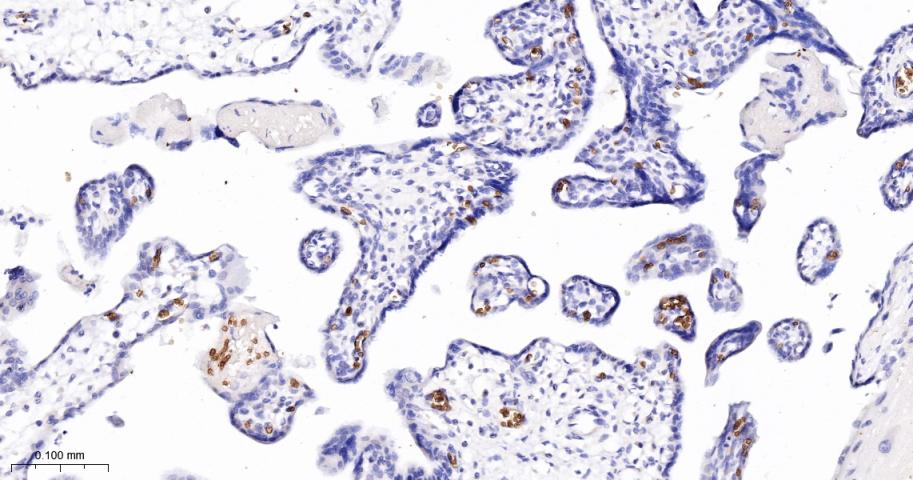
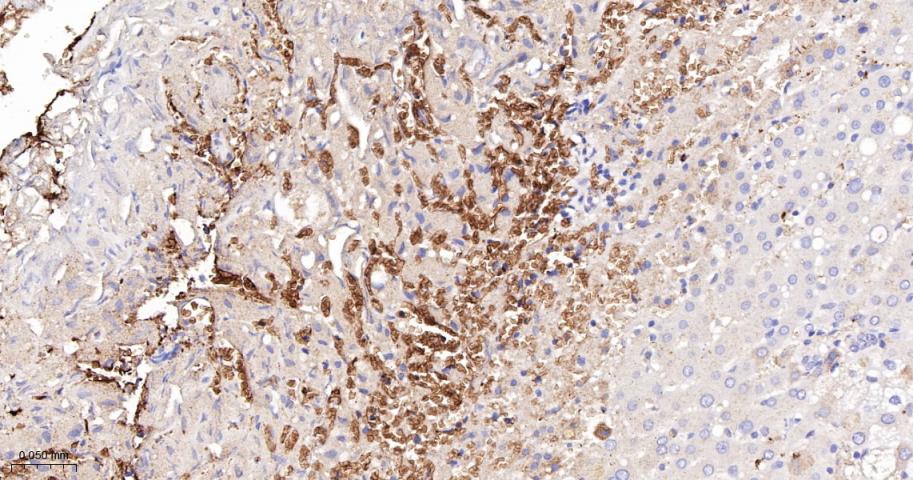
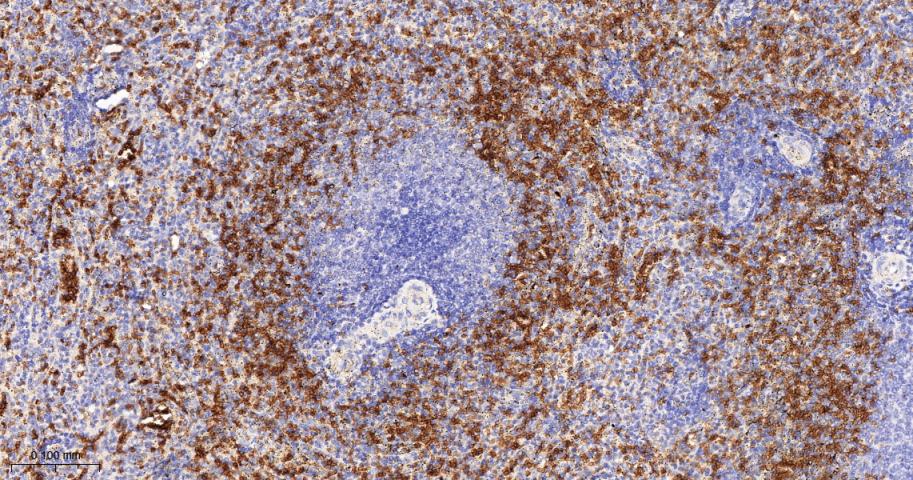
产品应用
| 应用 | 已检合格种属 | 预测种属 | 推荐稀释比例 |
|---|---|---|---|
| IHC-P | Human | 1:100-200 | |
| IHC-F | Human | 1:100-200 | |
| IF | Human | 1:100-200 |
交叉反应
交叉反应: Human
相关产品
暂无相关产品
靶标
基因名
SLC4A1
蛋白名
Band 3 anion transport protein
亚基
A dimer in solution, it spans the membrane asymmetrically and appears to be tetrameric. Interacts (via cytoplasmic N-terminus domain) with ANK1 (via N-terminus ANK repeats).
亚细胞定位
Membrane; Multi-pass membrane protein.
组织特异性
Erythrocytes.
翻译后修饰
Phosphorylated on Tyr-8 and Tyr-21 most likely by SYK. PP1-resistant phosphorylation that precedes Tyr-359 and Tyr-904 phosphorylation.
Phosphorylated on Tyr-359 and Tyr-904 most likely by LYN. PP1-inhibited phosphorylation that follows Tyr-8 and Tyr-21 phosphorylation.
Phosphorylated on Tyr-359 and Tyr-904 most likely by LYN. PP1-inhibited phosphorylation that follows Tyr-8 and Tyr-21 phosphorylation.
疾病
Defects in SLC4A1 are the cause of elliptocytosis type 4 (EL4) [MIM:109270]. EL4 is a Rhesus-unlinked form of hereditary elliptocytosis, a genetically heterogeneous, autosomal dominant hematologic disorder. It is characterized by variable hemolytic anemia and elliptical or oval red cell shape.
Defects in SLC4A1 are the cause of spherocytosis type 4 (SPH4) [MIM:612653]; also known as hereditary spherocytosis type 4 (HS4). Spherocytosis is a hematologic disorder leading to chronic hemolytic anemia and characterized by numerous abnormally shaped erythrocytes which are generally spheroidal.
Defects in SLC4A1 are the cause of autosomal dominant distal renal tubular acidosis (AD-dRTA) [MIM:179800]. This disease is characterized by reduced ability to acidify urine, variable hyperchloremic hypokalemic metabolic acidosis, nephrocalcinosis, and nephrolithiasis.
Defects in SLC4A1 are the cause of autosomal recessive distal renal tubular acidosis (AR-dRTA) [MIM:611590].
Defects in SLC4A1 are the cause of spherocytosis type 4 (SPH4) [MIM:612653]; also known as hereditary spherocytosis type 4 (HS4). Spherocytosis is a hematologic disorder leading to chronic hemolytic anemia and characterized by numerous abnormally shaped erythrocytes which are generally spheroidal.
Defects in SLC4A1 are the cause of autosomal dominant distal renal tubular acidosis (AD-dRTA) [MIM:179800]. This disease is characterized by reduced ability to acidify urine, variable hyperchloremic hypokalemic metabolic acidosis, nephrocalcinosis, and nephrolithiasis.
Defects in SLC4A1 are the cause of autosomal recessive distal renal tubular acidosis (AR-dRTA) [MIM:611590].
相似性
Belongs to the anion exchanger (TC 2.A.31) family.
功能
Band 3 is the major integral glycoprotein of the erythrocyte membrane. Band 3 has two functional domains. Its integral domain mediates a 1:1 exchange of inorganic anions across the membrane, whereas its cytoplasmic domain provides binding sites for cytoskeletal proteins, glycolytic enzymes, and hemoglobin.
同靶标产品
相关文献
提示: 发表研究结果有使用 bsm-61887R 时请让我们知道,以便我们可以引用参考文章。作为回馈,资料提供者将获得我们送上的小礼品。