Cystatin-C Recombinant Rabbit mAb (一抗) - WB,IHC-P,IHC-F,IF | Bioss
Rrmab?兔单抗
货号:bsm-61363R
产品详情
相关标记
相关产品
相关文献
常见问题
概述
产品编号
bsm-61363R
产品类型
重组兔单抗
英文名称
Cystatin-C Recombinant Rabbit mAb
中文名称
胱抑素C/半胱氨酸蛋白酶抑制剂C重组兔单抗
英文别名
ADLDWA; ARMD11; HEL-S-2; CysC; CYTC_HUMAN; CST3; Cystatin-3; Gamma-trace; Neuroendocrine basic polypeptide; Post-gamma-globulin; CYTC_MOUSE; CYTC_RAT; A0A8C0SEH9_CANLF; LOC607874; D5MTH1_FELCA;
抗体来源
Rabbit
免疫原
A synthesized peptide derived from human Cystatin C: 1-146
亚型
IgG
性状
Liquid
纯化方法
affinity purified by Protein A
克隆类型
Recombinant
克隆号
15H6
理论分子量
16 kDa
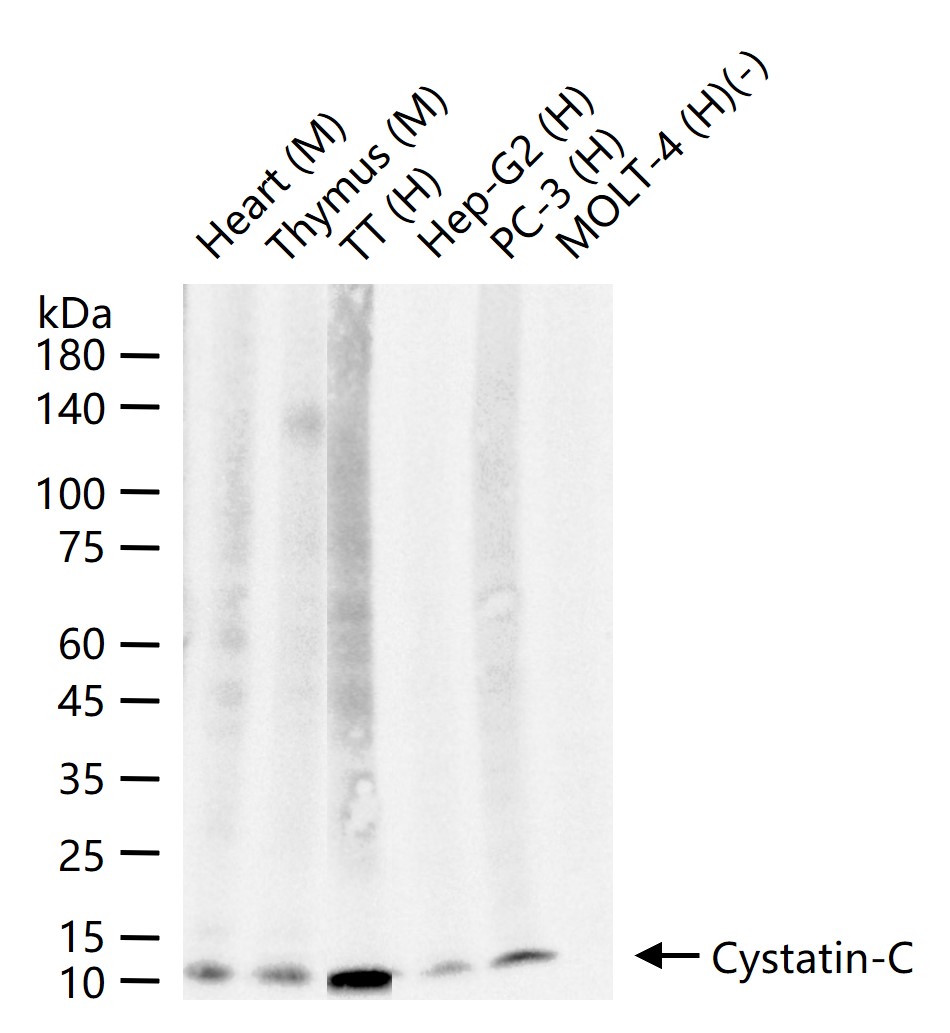
检测分子量
13 kDa
储存液
10mM phosphate buffered saline(pH 7.4) with 150mM sodium chloride, 0.05% BSA, 0.02% Proclin300 and 50% glycerol.
研究领域
SWISS
Gene ID
保存条件
Store at 4℃ for short term. Store at -20℃ for long term. Avoid repeated freeze/thaw cycles.
注意事项
This product as supplied is intended for research use only, not for use in human, therapeutic or diagnostic applications.
数据库链接
产品介绍
应用推荐(Capture-Detection): 6C1&9E6-1C3
背景资料
As an inhibitor of cysteine proteinases, this protein is thought to serve an important physiological role as a local regulator of this enzyme activity.
基因名
LOC607874
蛋白名
Cystatin domain-containing protein
亚基
Expressed in submandibular and sublingual saliva but not in parotid saliva (at protein level). Expressed in various body fluids, such as the cerebrospinal fluid and plasma. Expressed in highest levels in the epididymis, vas deferens, brain, thymus, and ovary and the lowest in the submandibular gland.
亚细胞定位
Secreted.
疾病
Defects in CST3 are the cause of amyloidosis type 6 (AMYL6) [MIM:105150]; also known as hereditary cerebral hemorrhage with amyloidosis (HCHWA), cerebral amyloid angiopathy (CAA) or cerebroarterial amyloidosis Icelandic type. AMYL6 is a hereditary generalized amyloidosis due to cystatin C amyloid deposition. Cystatin C amyloid accumulates in the walls of arteries, arterioles, and sometimes capillaries and veins of the brain, and in various organs including lymphoid tissue, spleen, salivary glands, and seminal vesicles. Amyloid deposition in the cerebral vessels results in cerebral amyloid angiopathy, cerebral hemorrhage and premature stroke. Cystatin C levels in the cerebrospinal fluid are abnormally low.
相似性
Belongs to the cystatin family.
功能
As an inhibitor of cysteine proteinases, this protein is thought to serve an important physiological role as a local regulator of this enzyme activity.
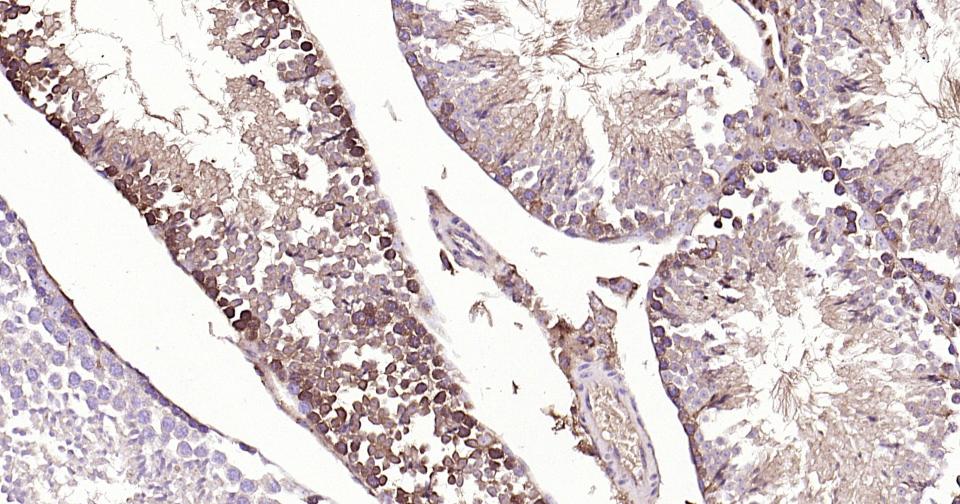
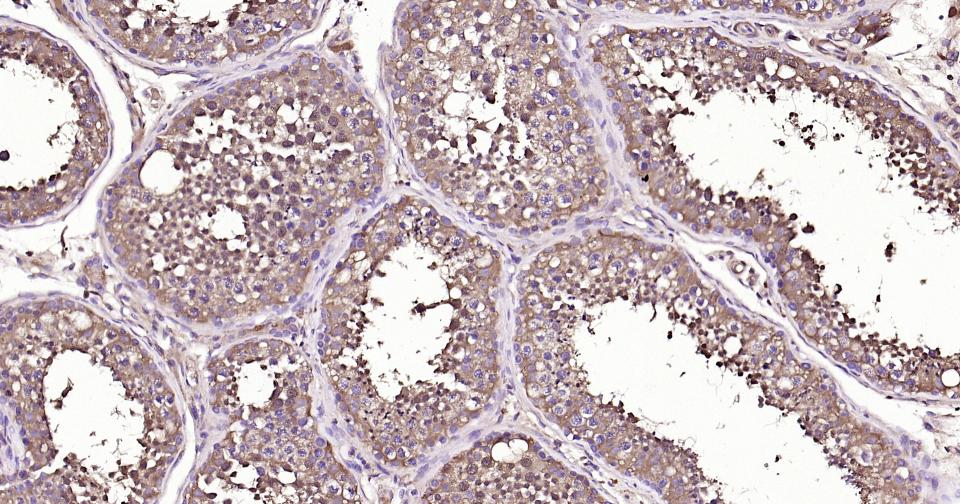
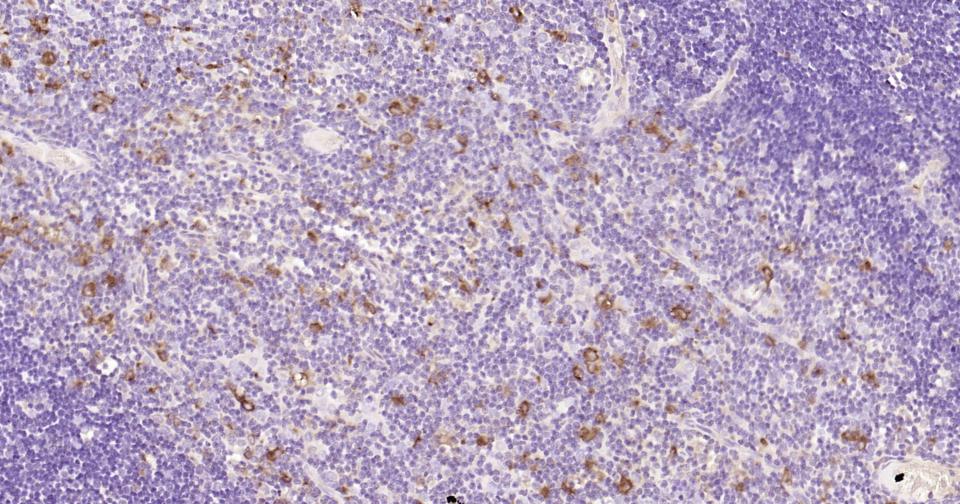
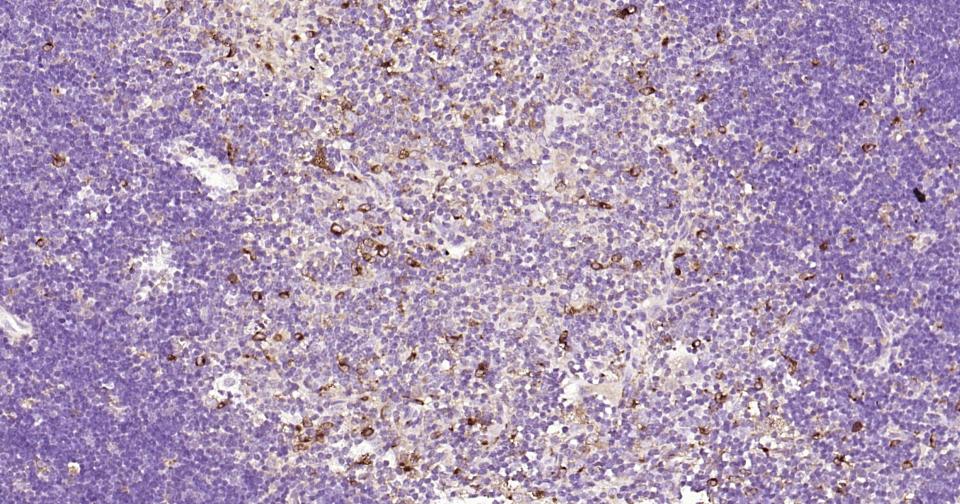
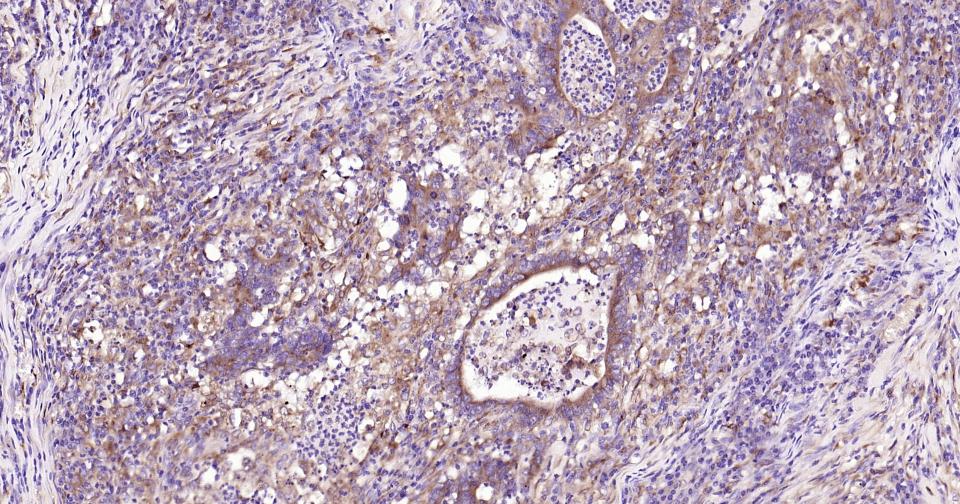
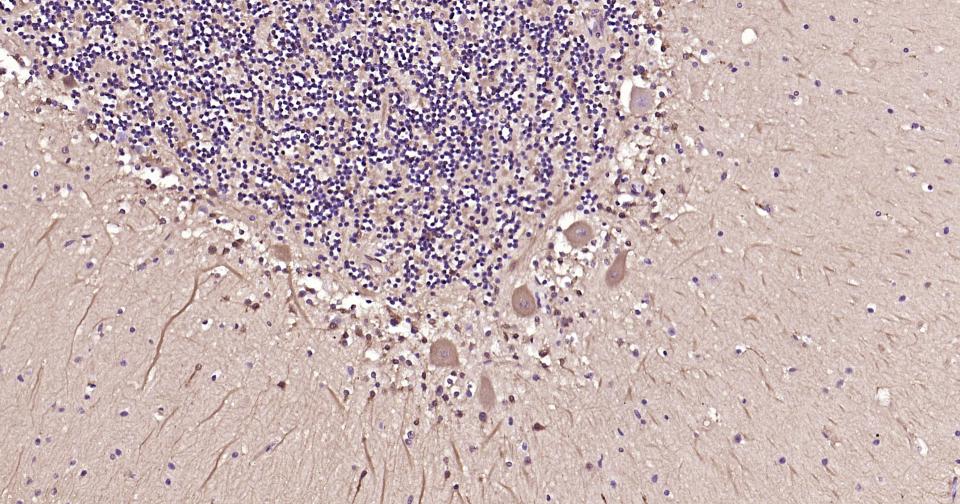
产品应用
| 应用 | 已检合格种属 | 预测种属 | 推荐稀释比例 |
|---|---|---|---|
| WB | Human, Mouse | Rat | 1:500-2000 |
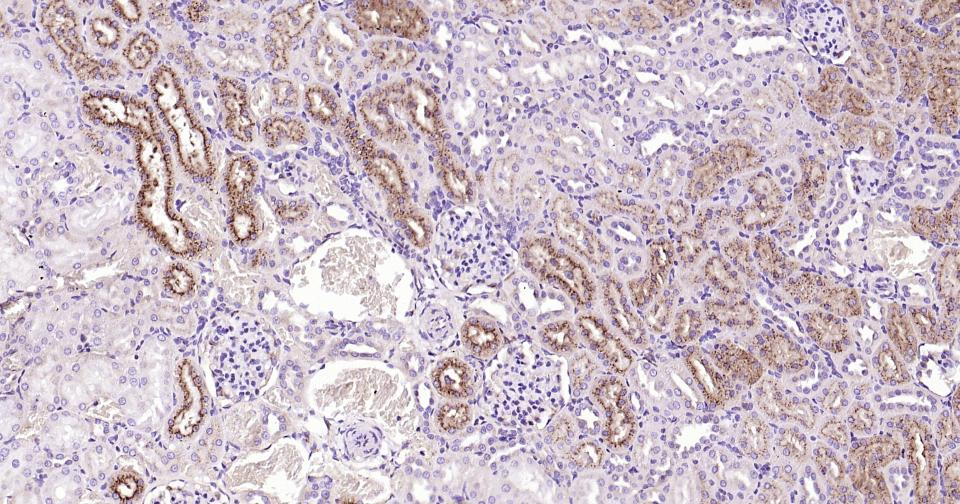
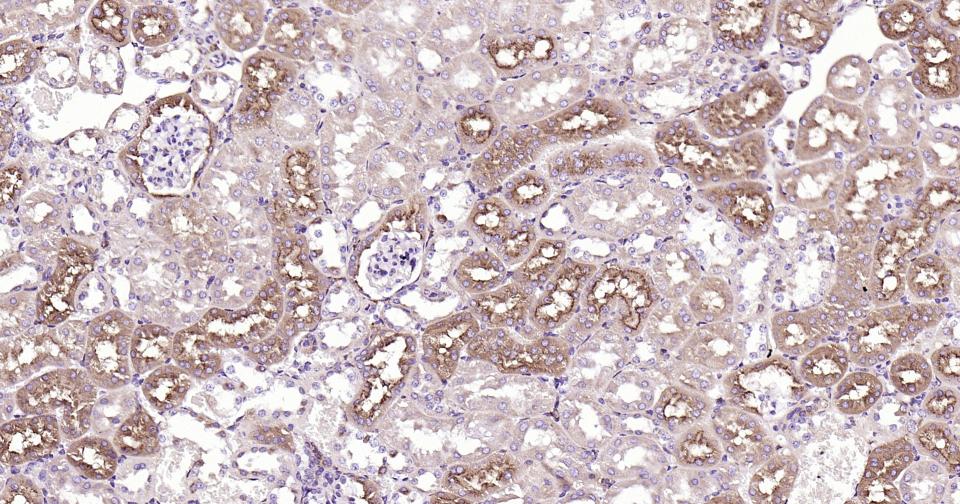
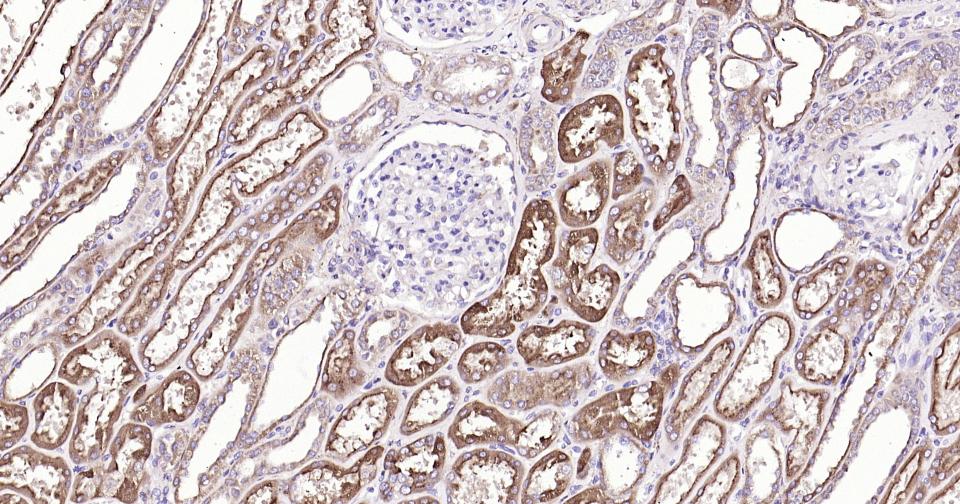
| IHC-P | Human, Mouse, Rat | 1:50-200 | |
| IHC-F | Human, Mouse, Rat | 1:50-200 | |
| IF | Human, Mouse, Rat | 1:50-200 |
交叉反应
交叉反应: Human, Mouse, Rat
相关产品
暂无相关产品
同靶标产品
相关文献
提示: 发表研究结果有使用 bsm-61363R 时请让我们知道,以便我们可以引用参考文章。作为回馈,资料提供者将获得我们送上的小礼品。