Melan A Recombinant Rabbit mAb (一抗) - WB,IHC-P,IHC-F,IF,Flow-Cyt,ICC/IF | Bioss
Rrmab?兔单抗
货号:bsm-52337R
产品详情
相关标记
相关产品
相关文献
常见问题
概述
产品编号
bsm-52337R
产品类型
重组兔单抗
英文名称
Melan A Recombinant Rabbit mAb
中文名称
黑色素瘤相关抗原/黑色素-A重组兔单抗
英文别名
MART-1; MART1; MAR1_HUMAN; MLANA; Antigen LB39-AA; Antigen SK29-AA; Protein Melan-A; melan-A
抗体来源
Rabbit
免疫原
A synthesized peptide derived from human MART1: 2-33
亚型
IgG
性状
Liquid
纯化方法
affinity purified by Protein A
克隆类型
Recombinant
克隆号
6E11
理论分子量
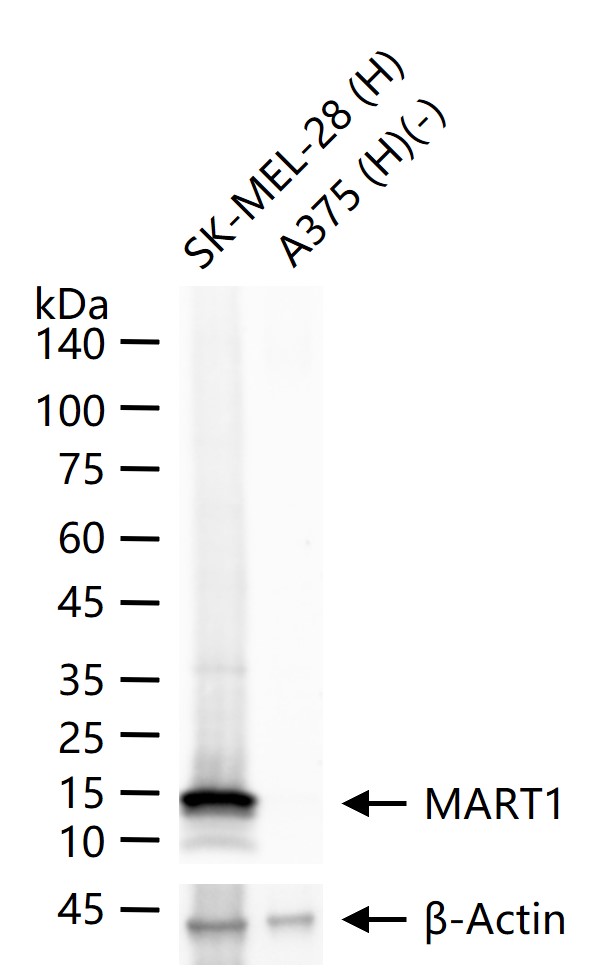
13 kDa
检测分子量
15 kDa
浓度
1mg/ml
储存液
0.01M TBS(pH7.4) with 1% BSA, 0.02% Proclin300 and 50% Glycerol.
研究领域
SWISS
Gene ID
保存条件
Shipped at 4℃. Store at -20 °C for one year. Avoid repeated freeze/thaw cycles.
注意事项
This product as supplied is intended for research use only, not for use in human, therapeutic or diagnostic applications.
产品介绍
信号中间体(Signaling Intermediates)
MelanA/MART-1是分化肿瘤抗原类别中具有代表性的成员,它表达于正常的黑素细胞和大多数原发及转移的黑色素瘤中,故称:黑色素瘤相关抗原。
MelanA/MART-1是分化肿瘤抗原类别中具有代表性的成员,它表达于正常的黑素细胞和大多数原发及转移的黑色素瘤中,故称:黑色素瘤相关抗原。
背景资料
Melan A, a product of the MART-1 gene, is a melanocyte differentiation marker recognized by autologous cytotoxic T lymphocytes. Other melanoma-associated markers recognized by autologous cytotoxic T cells are reported to include MAGE-1, MAGE-3, tyrosinase, gp100, gp75, BAGE-1 and GAGE-1. The analysis of these different molecules and their expression in individual melanomas may be of help in the study of their particular molecular roles in melanocyte differentiation and tumorigenesis.
基因名
MLANA
蛋白名
Melanoma antigen recognized by T-cells 1
亚基
Interacts with PMEL. Interacts with GPR143.
亚细胞定位
Endoplasmic reticulum membrane; Single-pass type III membrane protein. Golgi apparatus. Golgi apparatus, trans-Golgi network membrane. Melanosome. Note=Also found in small vesicles and tubules dispersed over the entire cytoplasm. A small fraction of the protein is inserted into the membrane in an inverted orientation. Inversion of membrane topology results in the relocalization of the protein from a predominant Golgi/post-Golgi area to the endoplasmic reticulum. Melanoma cells expressing the protein with an inverted membrane topology are more effectively recognized by specific cytolytic T-lymphocytes than those expressing the protein in its native membrane orientation.
组织特异性
Expression is restricted to melanoma and melanocyte cell lines and retina.
翻译后修饰
Acylated.
功能
Involved in melanosome biogenesis by ensuring the stability of GPR143. Plays a vital role in the expression, stability, trafficking, and processing of melanocyte protein PMEL, which is critical to the formation of stage II melanosomes.
产品应用
| 应用 | 已检合格种属 | 预测种属 | 推荐稀释比例 |
|---|---|---|---|
| WB | Human | 1:500-2000 | |
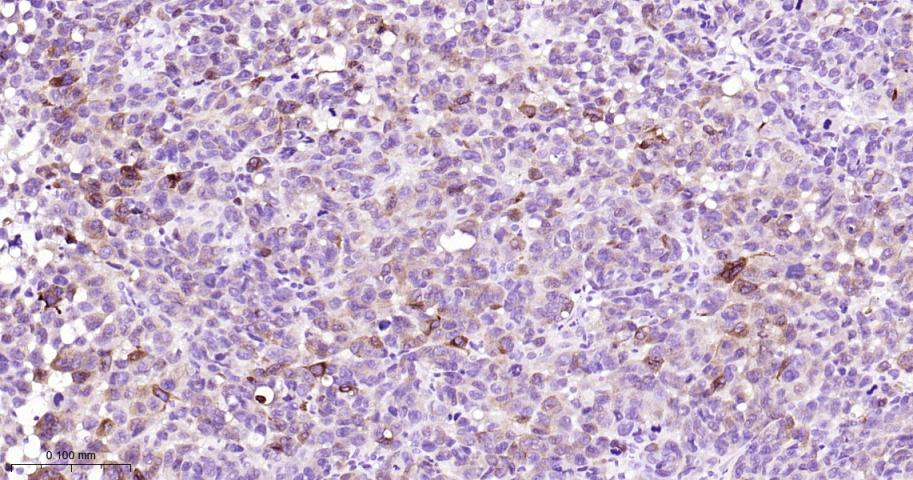
| IHC-P | Human | 1:50-200 | |
| IHC-F | Human | 1:50-200 | |
| IF | Human | 1:50-200 | |
| Flow-Cyt | Human | 1:50-100 | |
| ICC/IF | Human | 1:50-200 |
交叉反应
交叉反应: Human
相关产品
暂无相关产品
同靶标产品
相关文献
提示: 发表研究结果有使用 bsm-52337R 时请让我们知道,以便我们可以引用参考文章。作为回馈,资料提供者将获得我们送上的小礼品。