G-CSF/CSF3 Rabbit pAb (一抗) | Bioss
货号:bs-1023R
产品详情
相关标记
相关产品
相关文献
常见问题
概述
产品编号
bs-1023R
产品类型
农牧业/家禽抗体
英文名称
G-CSF/CSF3 Rabbit pAb
中文名称
粒细胞-巨噬细胞集落刺激因子3抗体
英文别名
C17orf33; CSF3OS; GCSF; CSF3_HUMAN; CSF3; G-CSF; Pluripoietin;
抗体来源
Rabbit
免疫原
KLH conjugated synthetic peptide derived from human CSF3: 155-198/207
亚型
IgG
性状
Liquid
纯化方法
affinity purified by Protein A
克隆类型
Polyclonal
理论分子量
19 kDa
浓度
1mg/ml
储存液
0.01M TBS (pH7.4) with 1% BSA, 0.02% Proclin300 and 50% Glycerol.
研究领域
SWISS
Gene ID
保存条件
Shipped at 4℃. Store at -20℃ for one year. Avoid repeated freeze/thaw cycles.
注意事项
This product as supplied is intended for research use only, not for use in human, therapeutic or diagnostic applications.
数据库链接
产品介绍
生长因子和激素( Growth Factor and Hormones)
集落刺激因子是一组功能很强的骨髓造血细胞增殖因子,GCSF(粒细胞克隆刺激因子)为其中一种,具有刺激粒系母细胞的增殖和分化,并可增强成熟粒细胞功能的作用。粒细胞集落刺激因子在抗感染的非特异性细胞免疫过程中起重要作用。
背景资料
Granulocyte-colony stimulating factor (G-CSF) is a growth factor and an essential cytokine belonging to the CSF family of hormone-like glycoproteins that regulate haematopoietic cell proliferation and differentiation. G-CSF was isolated initially as a factor supporting the growth of colonies of granulocytes in soft agar cultures. Cells of the monocyte/macrophage lineage are among the most prominent sources of G-CSF, but this factor can also be produced by normal cells of mesodermal origin, including vascular endothelial cells, fibroblasts, and mesothelial cells. Production of G-CSF can be induced in vitro in these cells by a wide variety of stimulatory agents, including LPS, TNF, IL-1, IL-3, I L-4, and IFN-Gamma. G-CSF is likely to play a role in the basal regulation of neutrophil production, and also functions as a primary regulatory factor controlling the neutrophil response to inflammatory stimuli. Furthermore, G-CSF exhibits other biological activities besides the proliferative effects, since G-CSF appears to modulate the distribution of neutrophils and progenitor cells within the body.
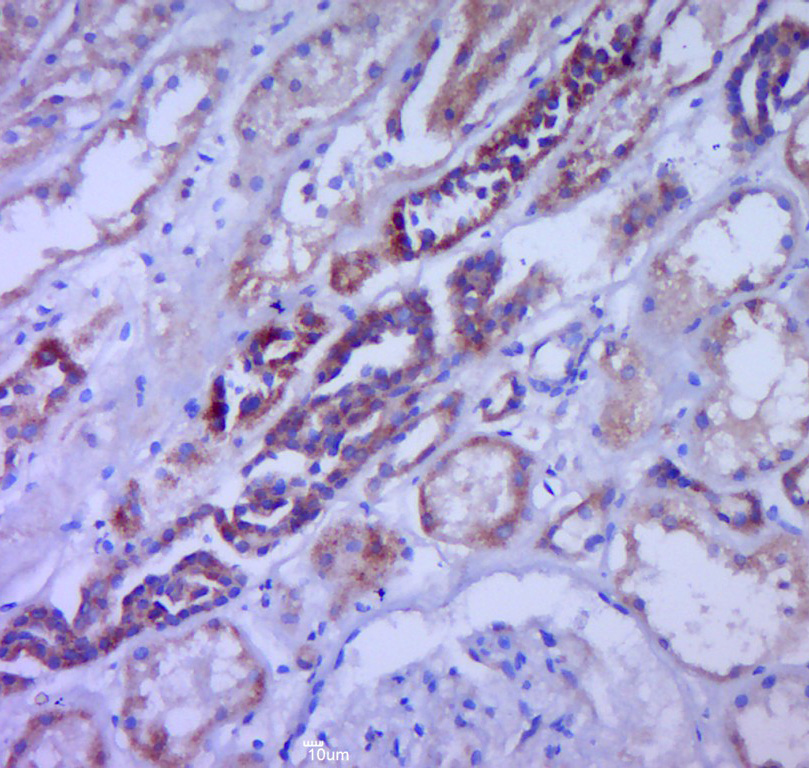
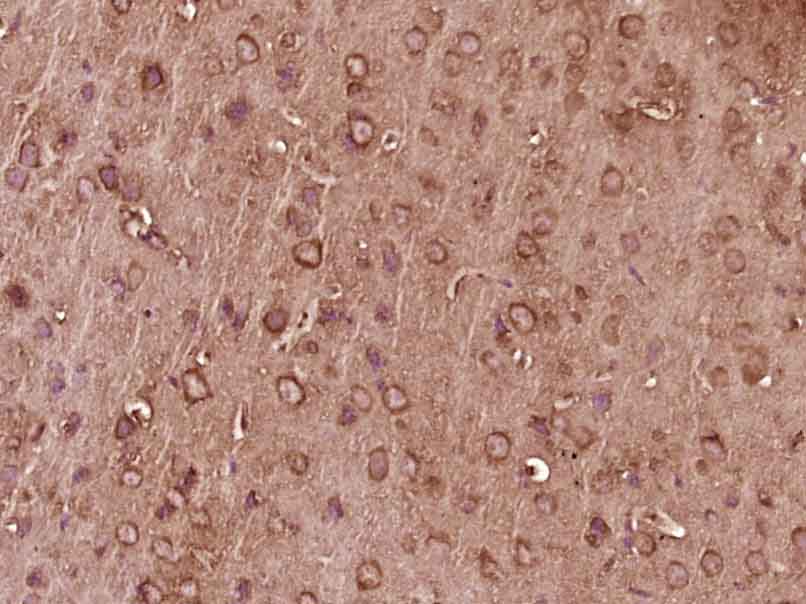
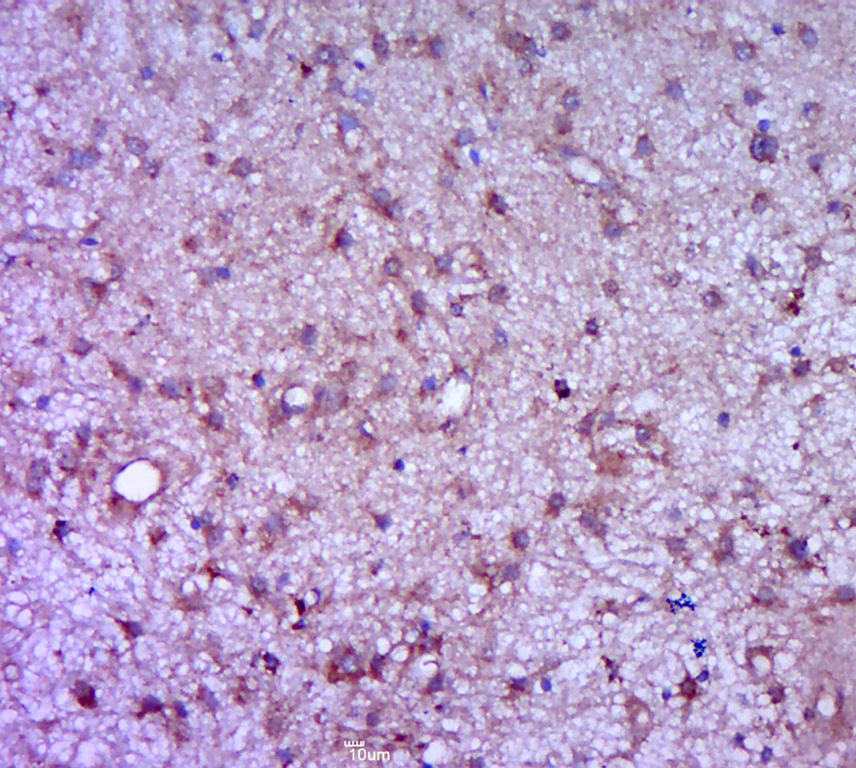
产品应用
| 应用 | 已检合格种属 | 预测种属 | 推荐稀释比例 |
|---|---|---|---|
| IHC-P | Human, Mouse | Rat, Pig, Sheep, Cow | 1:100-500 |
| IHC-F | Human, Mouse | Rat, Pig, Sheep, Cow | 1:100-500 |
| IF | Human, Mouse | Rat, Pig, Sheep, Cow | 1:100-500 |
交叉反应
交叉反应: Human, Mouse (predicted: Rat, Pig, Sheep, Cow)
相关产品
暂无相关产品
靶标
基因名
CSF3
蛋白名
Granulocyte colony-stimulating factor
亚细胞定位
Secreted.
翻译后修饰
O-glycan consists of Gal-GalNAc disaccharide which can be modified with up to two sialic acid residues (done in recombinantly expressed G-CSF from CHO cells).
相似性
Belongs to the IL-6 superfamily.
功能
Granulocyte/macrophage colony-stimulating factors are cytokines that act in hematopoiesis by controlling the production, differentiation, and function of 2 related white cell populations of the blood, the granulocytes and the monocytes-macrophages. This CSF induces granulocytes.
同靶标产品
相关文献
提示: 发表研究结果有使用 bs-1023R 时请让我们知道,以便我们可以引用参考文章。作为回馈,资料提供者将获得我们送上的小礼品。
具体参考文献:bs-1023R 被引用于10文献中