phospho-Src (Tyr529) Rabbit pAb (一抗) - WB,IHC-P,IHC-F,IF,ELISA | Bioss
货号:bs-1730R
产品详情
相关标记
相关产品
相关文献
常见问题
概述
产品编号
bs-1730R
产品类型
磷酸化抗体
英文名称
phospho-Src (Tyr529) Rabbit pAb
中文名称
磷酸化Src原癌基因抗体
英文别名
Src (phospho-Y529); p-Src; phospho-Src; Src (phospho-Tyr529); ASV; SRC1; THC6; c-SRC; p60-Src; pp60c-src; SRC_HUMAN; SRC; Proto-oncogene c-Src; pp60c-src (p60-Src); 2.7.10.2; SRC_MOUSE; SRC_RAT;
抗体来源
Rabbit
免疫原
KLH conjugated Synthesised phosphopeptide derived from mouse Src around the phosphorylation site of Tyr529: YF(p-T)S
亚型
IgG
性状
Liquid
纯化方法
affinity purified by Protein A
克隆类型
Polyclonal
理论分子量
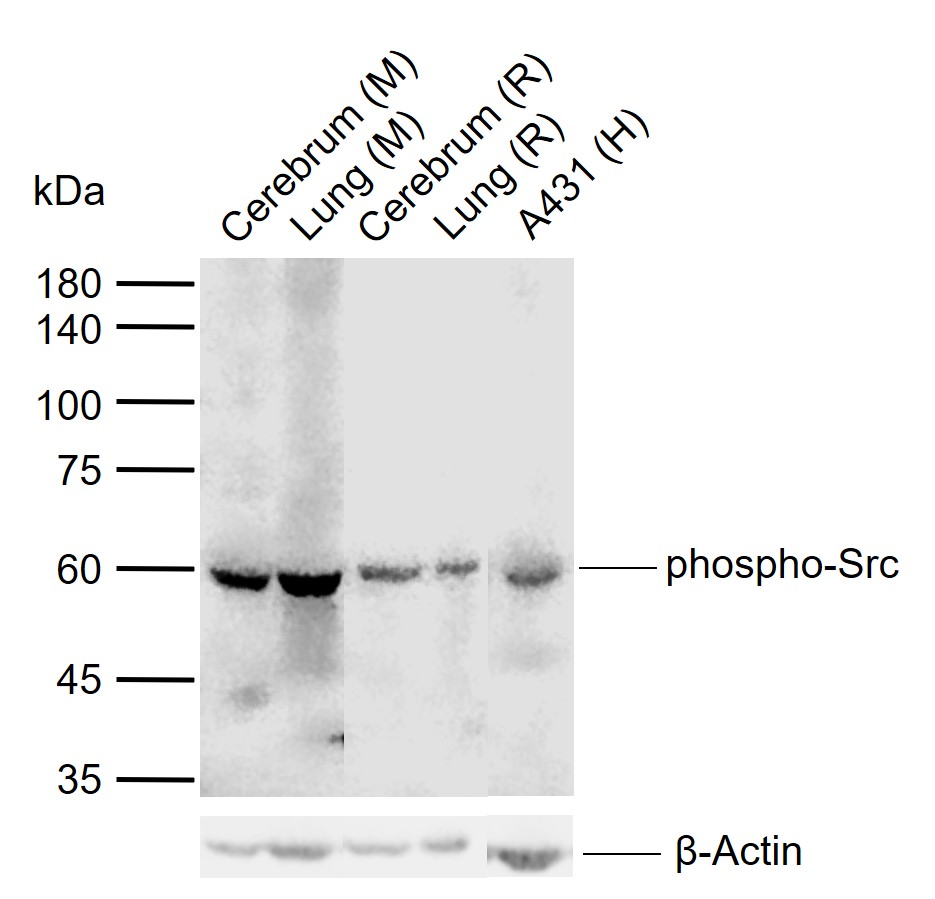
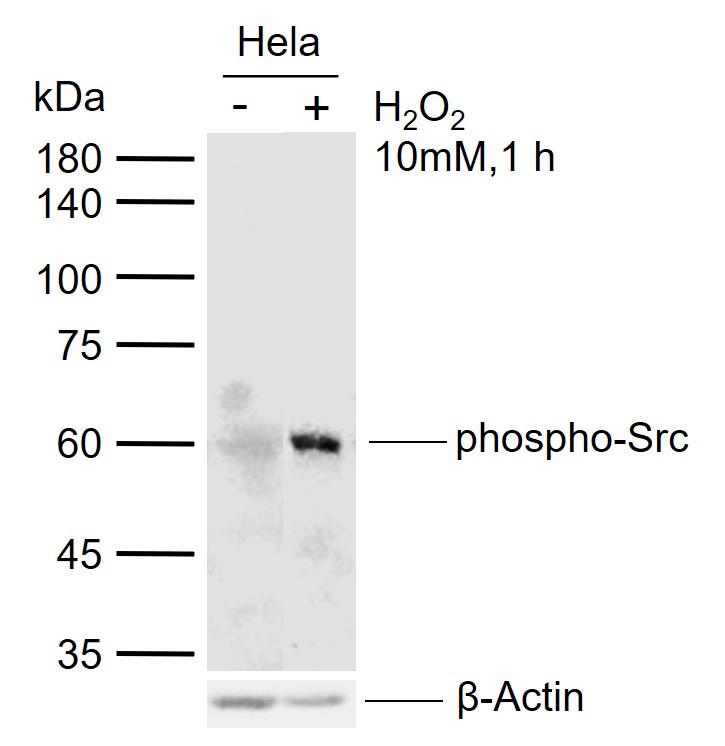
61 kDa
检测分子量
61 kDa
浓度
1mg/ml
储存液
0.01M TBS (pH7.4) with 1% BSA, 0.02% Proclin300 and 50% Glycerol.
研究领域
SWISS
Gene ID
保存条件
Shipped at 4℃. Store at -20℃ for one year. Avoid repeated freeze/thaw cycles.
注意事项
This product as supplied is intended for research use only, not for use in human, therapeutic or diagnostic applications.
数据库链接
产品介绍
src原癌基因具有酪氨酸激酶活性,参与调节正常细胞的生长与分化,在控制细胞增殖的信息转导途径中起作用;src原癌基因同样有活化癌基因的作用,能够诱导细胞的异常增殖和导致肿瘤发生。
背景资料
This gene is highly similar to the v-src gene of Rous sarcoma virus. This proto-oncogene may play a role in the regulation of embryonic development and cell growth. The protein encoded by this gene is a tyrosine-protein kinase whose activity can be inhibited by phosphorylation by c-SRC kinase. Mutations in this gene could be involved in the malignant progression of colon cancer. Two transcript variants encoding the same protein have been found for this gene. [provided by RefSeq, Jul 2008]
产品应用
| 应用 | 已检合格种属 | 预测种属 | 推荐稀释比例 |
|---|---|---|---|
| WB | Human, Mouse, Rat | 1:500-2000 | |
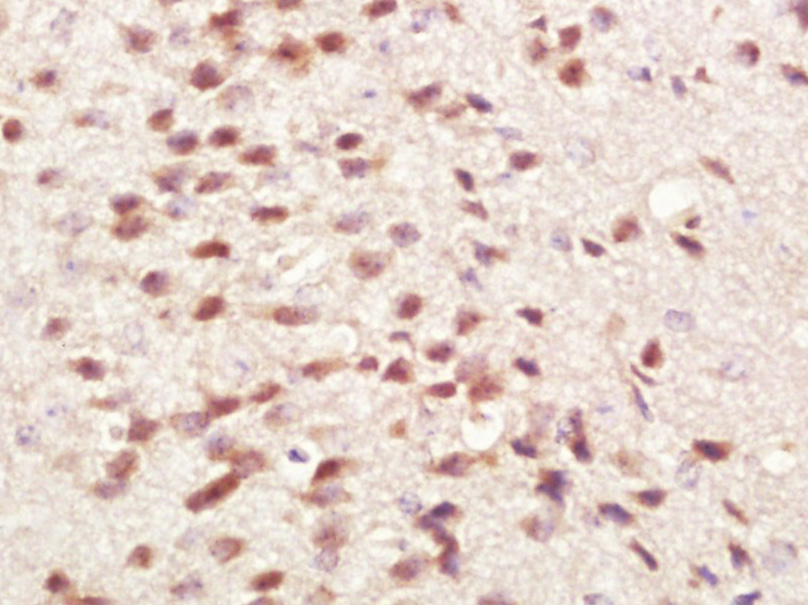
| IHC-P | Mouse | Human, Rat | 1:100-500 |
| IHC-F | Mouse | Human, Rat | 1:100-500 |
| IF | Mouse | Human, Rat | 1:100-500 |
| ELISA | Human, Mouse, Rat | 1:5000-10000 |
交叉反应
交叉反应: Human, Mouse, Rat
相关产品
暂无相关产品
靶标
基因名
SRC
蛋白名
Proto-oncogene tyrosine-protein kinase Src
亚基
Interacts with CDCP1, PELP1, TGFB1I1 and TOM1L2. Interacts with DDEF1/ASAP1 via its SH3 domain. Interacts with CCPG1. Interacts with the cytoplasmic domain of MUC1, phosphorylates it and increases binding of MUC1 with beta-catenin. Interacts with RALGPS1 via its SH3 domain. Interacts with CAV2 (tyrosine phosphorylated form). Interacts (via the SH3 domain and the protein kinase domain) with ARRB1; the interaction is independent of the phosphorylation state of SRC C-terminus. Interacts with FCAMR and PXN. Interacts with ARRB2. Interacts with ARRB1. Interacts with SRCIN1. Interacts with SRCIN1. Interacts with NDFIP2 and more weakly with NDFIP1. Interacts with PIK3CA and/or PIK3C2B, PTK2/FAK1, ESR1 (dimethylated on arginine) and FAK. Interacts (via SH2 and SH3 domain) with TNK2. Interacts (via protein kinase domain) with the tyrosine phosphorylated form of RUNX3 (via runt domain). Interacts with TRAF3 (via RING-type zinc finger domain). Interacts with DDX58, MAVS and TBK1. Interacts (via SH2 domain) with GNB2L1/RACK1; the interaction is enhanced by tyrosine phosphorylation of GNB2L1 and inhibits SRC activity. Interacts (via SH2 domain) with the 'Tyr-402' phosphorylated form of PTK2B/PYK2. Interacts (via SH2 domain) with FLT3 (tyrosine phosphorylated). Identified in a complex containing FGFR4, NCAM1, CDH2, PLCG1, FRS2, SRC, SHC1, GAP43 and CTTN. Interacts with EPHB1; activates the MAPK/ERK cascade to regulate cell migration. Interacts with ERBB2 and STAT1. Interacts with PDGFRA (tyrosine phosphorylated). Interacts with CSF1R. Interacts (via SH2 domain) with the 'Tyr-9' phosphorylated form of PDPK1. Interacts with DDR2. Interacts with AMOTL2; this interaction regulates the translocation of phosphorylated SRC to peripheral cell-matrix adhesion sites. Interacts with DDR1 and DAB2.
亚细胞定位
Cell membrane. Mitochondrion inner membrane. Nucleus. Cytoplasm, cytoskeleton. Note=Localizes to focal adhesion sites after integrin engagement. Localization to focal adhesion sites requires myristoylation and the SH3 domain.
组织特异性
Expressed ubiquitously. Platelets, neurons and osteoclasts express 5-fold to 200-fold higher levels than most other tissues.
翻译后修饰
Myristoylated at Gly-2, and this is essential for targeting to membranes.
Dephosphorylated at Tyr-535 by PTPRJ. Phosphorylated on Tyr-535 by c-Src kinase (CSK). The phosphorylated form is termed pp60c-src. Dephosphorylated by PTPRJ at Tyr-424. Normally maintained in an inactive conformation with the SH2 domain engaged with Tyr-535, the SH3 domain engaged with the SH2-kinase linker, and Tyr-424 dephosphorylated. Dephosphorylation of Tyr-535 as a result of protein tyrosine phosphatase (PTP) action disrupts the intramolecular interaction between the SH2 domain and Tyr-535, Tyr-424 can then become autophosphorylated, resulting in SRC activation. Phosphorylation of Tyr-535 by CSK allows this interaction to reform, resulting in SRC inactivation. CDK5-mediated phosphorylation at Ser-74 targets SRC to ubiquitin-dependent degradation and thus leads to cytoskeletal reorganization. Phosphorylated by PTK2/FAK1; this enhances kinase activity. Phosphorylated by PTK2B/PYK2; this enhances kinase activity.
S-nitrosylation is important for activation of its kinase activity.
Ubiquitinated in response to CDK5-mediated phosphorylation.
Dephosphorylated at Tyr-535 by PTPRJ. Phosphorylated on Tyr-535 by c-Src kinase (CSK). The phosphorylated form is termed pp60c-src. Dephosphorylated by PTPRJ at Tyr-424. Normally maintained in an inactive conformation with the SH2 domain engaged with Tyr-535, the SH3 domain engaged with the SH2-kinase linker, and Tyr-424 dephosphorylated. Dephosphorylation of Tyr-535 as a result of protein tyrosine phosphatase (PTP) action disrupts the intramolecular interaction between the SH2 domain and Tyr-535, Tyr-424 can then become autophosphorylated, resulting in SRC activation. Phosphorylation of Tyr-535 by CSK allows this interaction to reform, resulting in SRC inactivation. CDK5-mediated phosphorylation at Ser-74 targets SRC to ubiquitin-dependent degradation and thus leads to cytoskeletal reorganization. Phosphorylated by PTK2/FAK1; this enhances kinase activity. Phosphorylated by PTK2B/PYK2; this enhances kinase activity.
S-nitrosylation is important for activation of its kinase activity.
Ubiquitinated in response to CDK5-mediated phosphorylation.
疾病
Note=SRC kinase activity has been shown to be increased in several tumor tissues and tumor cell lines such as colon carcinoma cells.
相似性
Belongs to the protein kinase superfamily. Tyr protein kinase family. SRC subfamily.
Contains 1 protein kinase domain.
Contains 1 SH2 domain.
Contains 1 SH3 domain.
Contains 1 protein kinase domain.
Contains 1 SH2 domain.
Contains 1 SH3 domain.
功能
Non-receptor protein tyrosine kinase which is activated following engagement of many different classes of cellular receptors including immune response receptors, integrins and other adhesion receptors, receptor protein tyrosine kinases, G protein-coupled receptors as well as cytokine receptors. Participates in signaling pathways that control a diverse spectrum of biological activities including gene transcription, immune response, cell adhesion, cell cycle progression, apoptosis, migration, and transformation. Due to functional redundancy between members of the SRC kinase family, identification of the specific role of each SRC kinase is very difficult. SRC appears to be one of the primary kinases activated following engagement of receptors and plays a role in the activation of other protein tyrosine kinase (PTK) families. Receptor clustering or dimerization leads to recruitment of SRC to the receptor complexes where it phosphorylates the tyrosine residues within the receptor cytoplasmic domains. Plays an important role in the regulation of cytoskeletal organization through phosphorylation of specific substrates such as AFAP1. Phosphorylation of AFAP1 allows the SRC SH2 domain to bind AFAP1 and to localize to actin filaments. Cytoskeletal reorganization is also controlled through the phosphorylation of cortactin (CTTN). When cells adhere via focal adhesions to the extracellular matrix, signals are transmitted by integrins into the cell resulting in tyrosine phosphorylation of a number of focal adhesion proteins, including PTK2/FAK1 and paxillin (PXN). In addition to phosphorylating focal adhesion proteins, SRC is also active at the sites of cell-cell contact adherens junctions and phosphorylates substrates such as beta-catenin (CTNNB1), delta-catenin (CTNND1), and plakoglobin (JUP). Another type of cell-cell junction, the gap junction, is also a target for SRC, which phosphorylates connexin-43 (GJA1). SRC is implicated in regulation of pre-mRNA-processing and phosphorylates RNA-binding proteins such as KHDRBS1. Also plays a role in PDGF-mediated tyrosine phosphorylation of both STAT1 and STAT3, leading to increased DNA binding activity of these transcription factors. Involved in the RAS pathway through phosphorylation of RASA1 and RASGRF1. Plays a role in EGF-mediated calcium-activated chloride channel activation. Required for epidermal growth factor receptor (EGFR) internalization through phosphorylation of clathrin heavy chain (CLTC and CLTCL1) at 'Tyr-1477'. Involved in beta-arrestin (ARRB1 and ARRB2) desensitization through phosphorylation and activation of ADRBK1, leading to beta-arrestin phosphorylation and internalization. Has a critical role in the stimulation of the CDK20/MAPK3 mitogen-activated protein kinase cascade by epidermal growth factor. Might be involved not only in mediating the transduction of mitogenic signals at the level of the plasma membrane but also in controlling progression through the cell cycle via interaction with regulatory proteins in the nucleus. Plays an important role in osteoclastic bone resorption in conjunction with PTK2B/PYK2. Both the formation of a SRC-PTK2B/PYK2 complex and SRC kinase activity are necessary for this function. Recruited to activated integrins by PTK2B/PYK2, thereby phosphorylating CBL, which in turn induces the activation and recruitment of phosphatidylinositol 3-kinase to the cell membrane in a signaling pathway that is critical for osteoclast function. Promotes energy production in osteoclasts by activating mitochondrial cytochrome C oxidase. Phosphorylates DDR2 on tyrosine residues, thereby promoting its subsequent autophosphorylation. Phosphorylates RUNX3 and COX2 on tyrosine residues, TNK2 on 'Tyr-284' and CBL on 'Tyr-731'. Enhances DDX58/RIG-I-elicited antiviral signaling. Phosphorylates PDPK1 at 'Tyr-9', 'Tyr-373' and 'Tyr-376'. Phosphorylates BCAR1 at 'Tyr-132'.
同靶标产品
相关文献
提示: 发表研究结果有使用 bs-1730R 时请让我们知道,以便我们可以引用参考文章。作为回馈,资料提供者将获得我们送上的小礼品。
具体参考文献:bs-1730R 被引用于1文献中