FABP3/H-FABP Rabbit pAb (一抗) | Bioss
货号:bs-41180R
产品详情
相关标记
相关产品
相关文献
常见问题
概述
产品编号
bs-41180R
英文名称
FABP3/H-FABP Rabbit pAb
中文名称
心型脂肪酸结合蛋白/脂肪酸结合蛋白3抗体
英文别名
FABP11; H-FABP; M-FABP; MDGI; O-FABP; Fabph-1; Fabph-4; Fabph1; Fabph4; FABPH_HUMAN; FABP3; Fatty acid-binding protein 3; Heart-type fatty acid-binding protein (H-FABP); Mammary-derived growth inhibitor (MDGI); Muscle fatty acid-binding protein (M-FABP); FABPH_MOUSE; FABPH_RAT;
抗体来源
Rabbit
免疫原
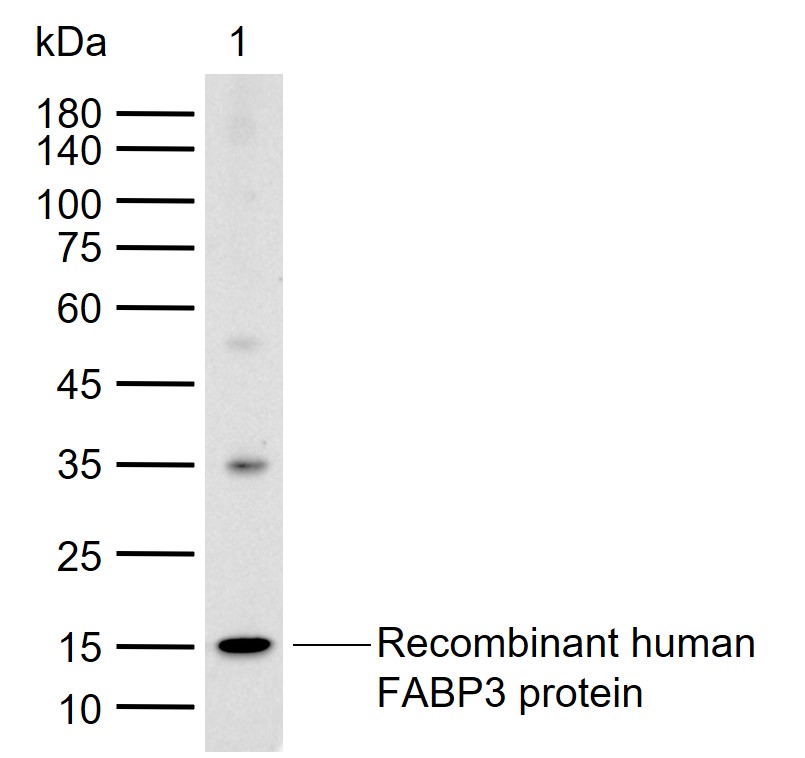
Recombinant human FABP3
亚型
IgG
性状
Liquid
纯化方法
affinity purified by Protein A
克隆类型
Polyclonal
理论分子量
15 kDa
检测分子量
15 kDa
浓度
1mg/ml
储存液
0.01M TBS (pH7.4) with 1% BSA, 0.02% Proclin300 and 50% Glycerol.
研究领域
SWISS
Gene ID
保存条件
Shipped at 4℃. Store at -20℃ for one year. Avoid repeated freeze/thaw cycles.
注意事项
This product as supplied is intended for research use only, not for use in human, therapeutic or diagnostic applications.
数据库链接
背景资料
Fatty acid-binding proteins, designated FABPs, are a family of homologous cytoplasmic proteins that are expressed in a highly tissue-specific manner and play an integral role in the balance between lipid and carbohydrate metabolism. FABPs mediate fatty acid (FA) and/or hydrophobic ligand uptake, transport and targeting within their respective tissues. The mechanisms underlying these actions can give rise to both passive diffusional uptake and protein-mediated transmembrane transport of FAs. FABPs are expressed in adipocytes (A-FABP), brain (B-FABP), epidermis (E-FABP, also designated psoriasis-associated FABP or PA-FABP), muscle and heart (H-FABP, also designated mammary-derived growth inhibitor or MDGI), intestine (I-FABP), liver (L-FABP), myelin (M-FABP) and testis (T-FABP). MDGI is highly expressed in the myocardium, skeletal and smooth muscle fibers, lipid and/or steroid synthesizing cells and terminally differentiated epithelia of the respiratory, intestinal and urogenital tracts.
产品应用
| 应用 | 已检合格种属 | 预测种属 | 推荐稀释比例 |
|---|---|---|---|
| WB | Human | 1:500-2000 |
交叉反应
交叉反应: Human
相关产品
暂无相关产品
靶标
基因名
FABP3
蛋白名
Fatty acid-binding protein, heart
亚细胞定位
Cytoplasm.
相似性
Belongs to the calycin superfamily. Fatty-acid binding protein (FABP) family.
功能
FABP are thought to play a role in the intracellular transport of long-chain fatty acids and their acyl-CoA esters.
同靶标产品
相关文献
提示: 发表研究结果有使用 bs-41180R 时请让我们知道,以便我们可以引用参考文章。作为回馈,资料提供者将获得我们送上的小礼品。