PPV | VP2 Rabbit pAb (一抗) - WB,ELISA | Bioss
货号:bs-41390R
产品详情
相关标记
相关产品
相关文献
常见问题
概述
产品编号
bs-41390R
产品类型
农牧业/家禽抗体
英文名称
PPV | VP2 Rabbit pAb
中文名称
猪细小病毒VP2蛋白抗体
英文别名
PPV-VP2; Porcine parvovirus VP2; PPV Isoform VP2(P18546-2); Capsid protein VP1; CAPSD_PAVPN.; VP2;
抗体来源
Rabbit
免疫原
Recombinant PPV VP2 protein : 1-579/579
亚型
IgG
性状
Liquid
纯化方法
affinity purified by Protein A
克隆类型
Polyclonal
理论分子量
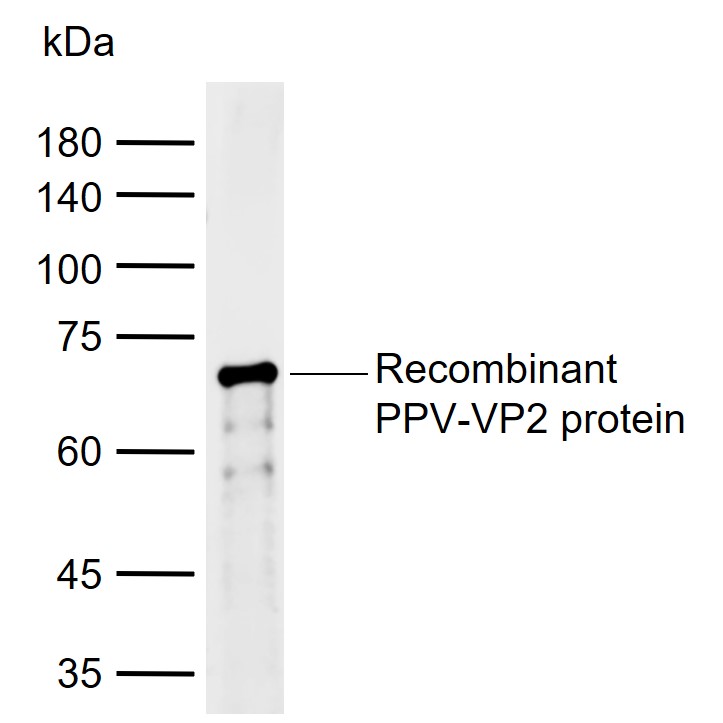
64/81 kDa
检测分子量
70 kDa
浓度
1mg/ml
储存液
0.01M TBS (pH7.4) with 1% BSA, 0.02% Proclin300 and 50% Glycerol.
保存条件
Shipped at 4℃. Store at -20℃ for one year. Avoid repeated freeze/thaw cycles.
注意事项
This product as supplied is intended for research use only, not for use in human, therapeutic or diagnostic applications.
数据库链接
产品介绍
猪细小病毒(Porcine parvovirus,PPV)是引起猪繁殖障碍的重要病毒性传染病。病毒经口、鼻等黏膜感染是其主要感染途径。怀孕母猪感染后可通过胎盘感染引起母猪流产、死胎、木乃伊胎及新生仔猪死亡。因该病流行面广,危害严重,给养猪业带来重大经济损失。PPV基因组编码3种结构蛋白,分别是VP1、VP2、VP3,其中VP2是构成病毒粒子的主要衣壳蛋白,约占病毒衣壳蛋白总量的80%,VP2蛋白携带主要的抗原决定簇,可诱导机体产生中和抗体,VP2对病毒感染、发挥其致病性方面亦起关键作用。因此,PPV-VP2蛋白在PPV诊断和免疫防治等有着很重要的意义。
背景资料
Porcine Parvovirus Infection (PPV) is the most common and important cause of infectious infertility. Porcine parvovirus is a fairly tough virus that multiplies normally in the intestine of the pig without causing clinical signs. It is world-wide in its distribution. If you test for it in your pig herd it is almost certain it will be present unless your herd is less than 100 sows when it might have died out. It is therefore an infection you have to live with and manage. Whereas most viruses do not survive outside the host for any great period of time PPV is unusual in that it can persist outside the pig for many months and it is resistant to most disinfectants. This perhaps explains why it is so widespread and so difficult to remove from the pig environment.
基因名
VP2
蛋白名
Capsid protein VP2
亚细胞定位
Host nucleus.
相似性
Belongs to the parvoviridae capsid protein family.
功能
Capsid protein self-assembles to form an icosahedral capsid with a T=1 symmetry, about 22 nm in diameter, and consisting of 60 copies of two size variants of the capsid proteins, VP1 and VP2, which differ by the presence of an N-terminal extension in the minor protein VP1. The capsid encapsulates the genomic ssDNA. Capsid proteins are responsible for the attachment to host cell receptors. This attachment induces virion internalization predominantly through clathrin-dependent endocytosis. Binding to the host receptors also induces capsid rearrangements leading to surface exposure of VP1 N-terminus, specifically its phospholipase A2-like region and putative nuclear localization signal(s). VP1 N-terminus might serve as a lipolytic enzyme to breach the endosomal membrane during entry into host cell and might contribute to virus transport to the nucleus (By similarity).
产品应用
| 应用 | 已检合格种属 | 预测种属 | 推荐稀释比例 |
|---|---|---|---|
| WB | PPV | 1:500-2000 | |
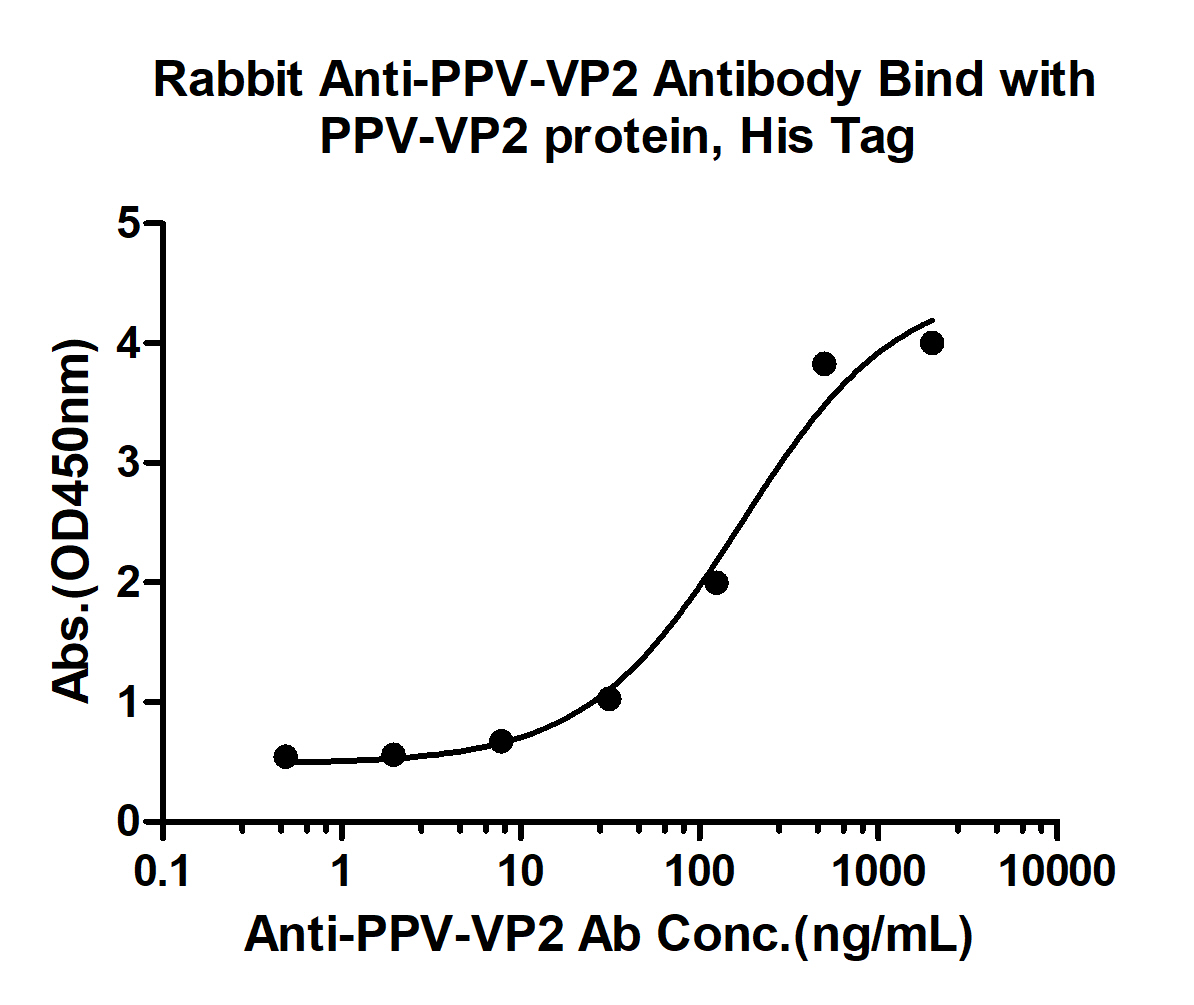
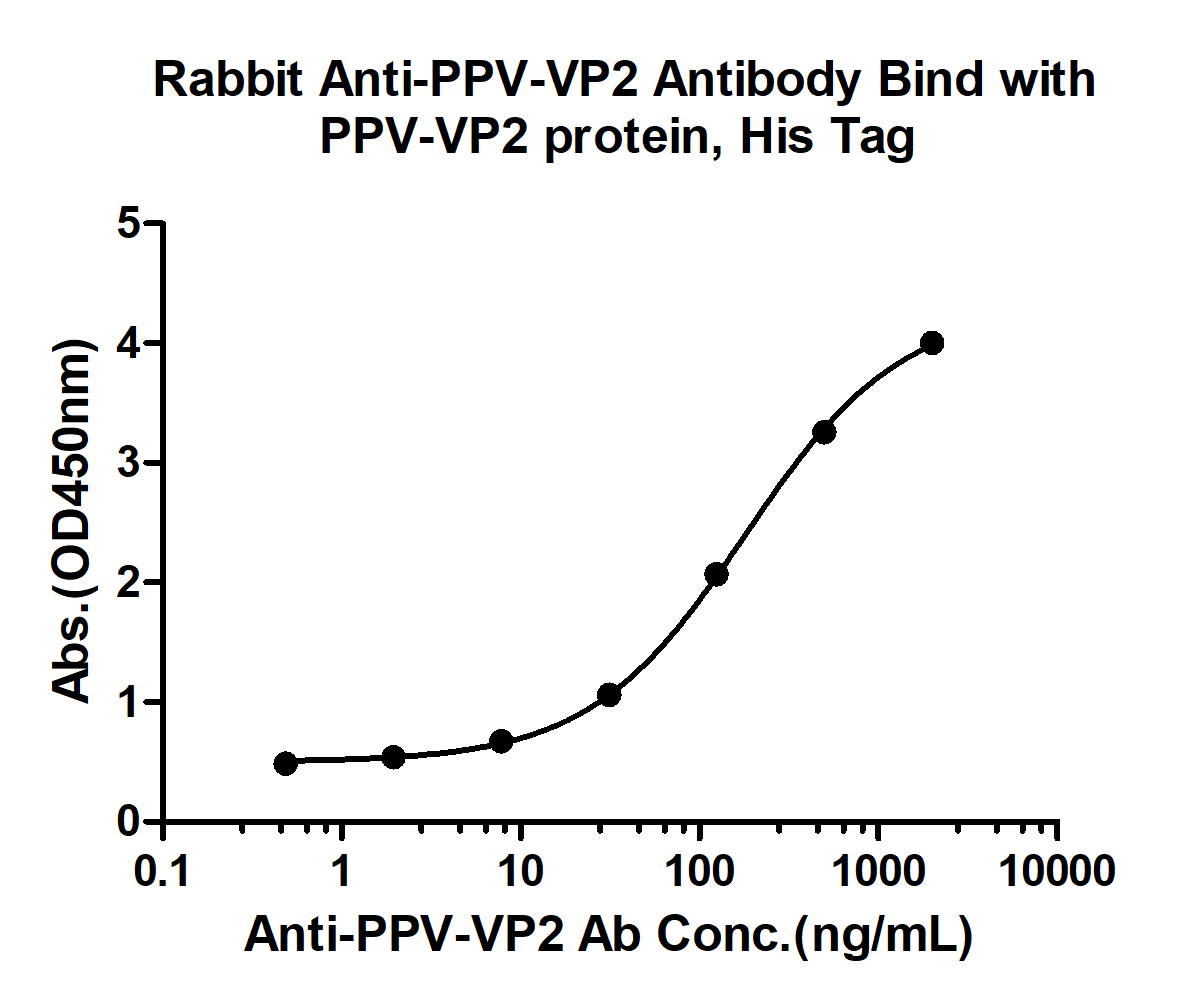
| ELISA | PPV | 1:5000-10000 |
交叉反应
交叉反应: PPV
相关产品
暂无相关产品
同靶标产品
相关文献
提示: 发表研究结果有使用 bs-41390R 时请让我们知道,以便我们可以引用参考文章。作为回馈,资料提供者将获得我们送上的小礼品。
具体参考文献:bs-41390R 被引用于1文献中