TLR9 | CD289 Rabbit pAb (一抗) | Bioss
货号:bs-23640R
产品详情
相关标记
相关产品
相关文献
常见问题
概述
产品编号
bs-23640R
英文名称
TLR9 | CD289 Rabbit pAb
中文名称
Toll样受体9抗体
英文别名
CD289; TLR9_HUMAN; TLR9; TLR9_MOUSE; toll like receptor 9; toll-like receptor 9
抗体来源
Rabbit
免疫原
KLH conjugated synthetic peptide derived from human TLR9: 401-500/1032
亚型
IgG
性状
Liquid
纯化方法
affinity purified by Protein A
克隆类型
Polyclonal
理论分子量
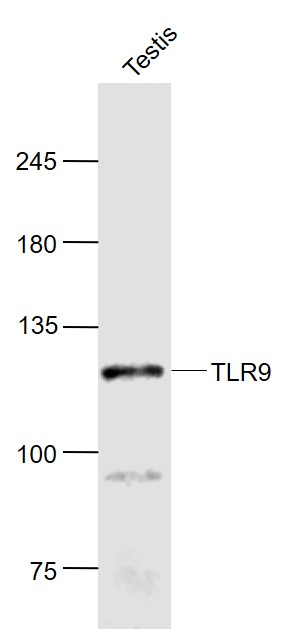
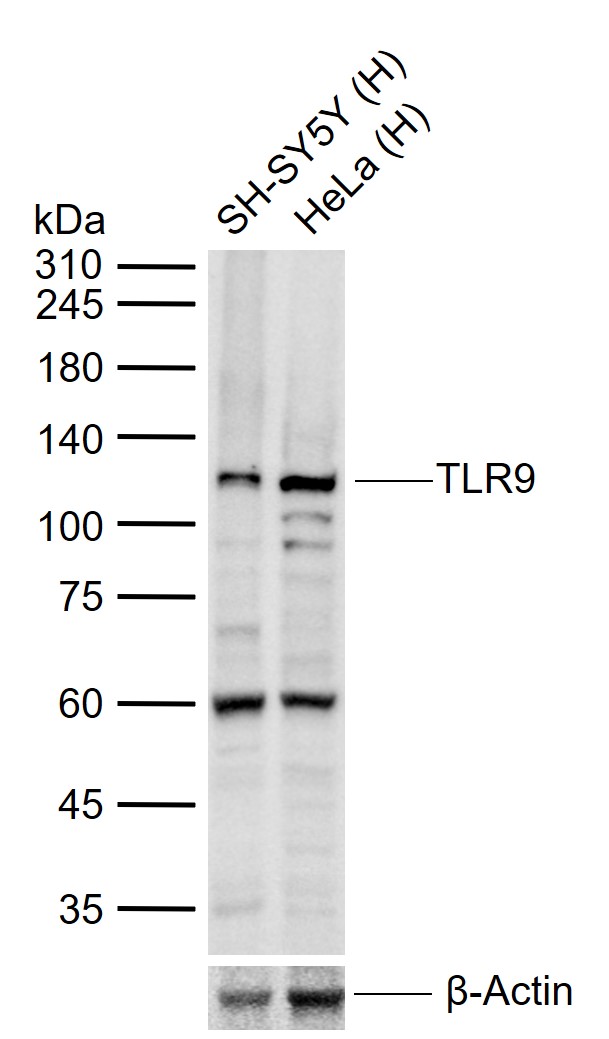
113 kDa
检测分子量
120 kDa
浓度
1mg/ml
储存液
0.01M TBS (pH7.4) with 1% BSA, 0.02% Proclin300 and 50% Glycerol.
研究领域
SWISS
Gene ID
保存条件
Shipped at 4℃. Store at -20℃ for one year. Avoid repeated freeze/thaw cycles.
注意事项
This product as supplied is intended for research use only, not for use in human, therapeutic or diagnostic applications.
数据库链接
产品介绍
Toll样受体-9(Toll-like receptor 9,TLR9)是哺乳动物TLRs家族中一员,作为细胞表面的天然模式识别受体,主要参与免疫刺激序列(CpG序列)激活免疫细胞的信号传导,从而在天然抗感染免疫及联系天然免疫和获得性免疫中发挥重要作用。
背景资料
The protein encoded by this gene is a member of the Toll-like receptor (TLR) family which plays a fundamental role in pathogen recognition and activation of innate immunity. TLRs are highly conserved from Drosophila to humans and share structural and functional similarities. They recognize pathogen-associated molecular patterns (PAMPs) that are expressed on infectious agents, and mediate the production of cytokines necessary for the development of effective immunity. The various TLRs exhibit different patterns of expression. This gene is preferentially expressed in immune cell rich tissues, such as spleen, lymph node, bone marrow and peripheral blood leukocytes. Studies in mice and human indicate that this receptor mediates cellular response to unmethylated CpG dinucleotides in bacterial DNA to mount an innate immune response. [provided by RefSeq, Jul 2008]
基因名
TLR9
蛋白名
Toll-like receptor 9
亚基
Interacts with MYD88 via their respective TIR domains. Interacts with CNPY3. Interacts (via transmembrane domain) with UNC93B1. Interacts with BTK.
亚细胞定位
Endoplasmic reticulum membrane; Single-pass type I membrane protein. Endosome. Lysosome. Cytoplasmic vesicle, phagosome. Note=Relocalizes from endoplasmic reticulum to endosome and lysosome upon stimulation with agonist.
组织特异性
Highly expressed in spleen, lymph node, tonsil and peripheral blood leukocytes, especially in plasmacytoid pre-dendritic cells. Levels are much lower in monocytes and CD11c+ immature dendritic cells. Also detected in lung and liver.
相似性
Belongs to the Toll-like receptor family. Contains 26 LRR (leucine-rich) repeats. Contains 1 TIR domain.
功能
Key component of innate and adaptive immunity. TLRs (Toll-like receptors) control host immune response against pathogens through recognition of molecular patterns specific to microorganisms. TLR9 is a nucleotide-sensing TLR which is activated by unmethylated cytidine-phosphate-guanosine (CpG) dinucleotides. Acts via MYD88 and TRAF6, leading to NF-kappa-B activation, cytokine secretion and the inflammatory response. Controls lymphocyte response to Helicobacter infection.
产品应用
| 应用 | 已检合格种属 | 预测种属 | 推荐稀释比例 |
|---|---|---|---|
| WB | Human, Mouse | 1:500-2000 |
交叉反应
交叉反应: Human, Mouse
相关产品
暂无相关产品
同靶标产品
相关文献
提示: 发表研究结果有使用 bs-23640R 时请让我们知道,以便我们可以引用参考文章。作为回馈,资料提供者将获得我们送上的小礼品。
具体参考文献:bs-23640R 被引用于3文献中